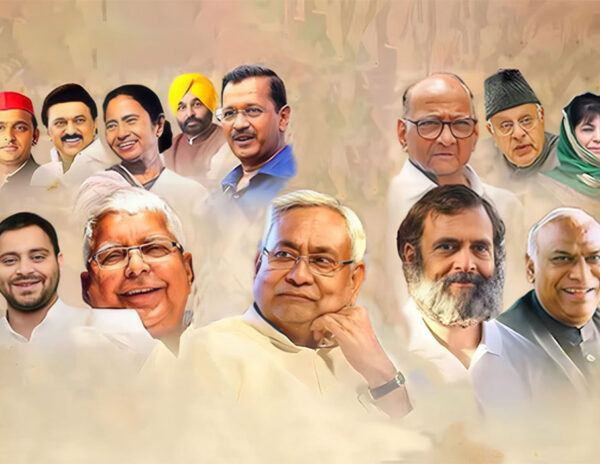
 Alliances play a crucial role in the politics of our country. Currently, there are two major national alliances: the United Progressive Alliance (UPA) and the National Democratic Alliance (NDA). The UPA is primarily dominated by the Congress Party, while the BJP holds prominence in the NDA.
The UPA coalition was formed in 2004 after no single party secured a clear majority in the elections. The Left parties were also part of this coalition.
In the 2004 elections, the NDA won 181 seats, while the UPA secured 218 seats. As a result, the UPA coalition governed the country from 2004 to 2014, with Sonia Gandhi, the then Congress President, serving as the Chairperson of UPA.
However, in the 2019 elections, the UPA alliance was defeated by the NDA alliance. Currently, the UPA is in power in seven states across the country.
The UPA alliance consists of 19 parties. Several opposition parties are currently advocating for a name change of the UPA. The Trinamool Congress led by Mamata Banerjee and the Aam Aadmi Party led by Arvind Kejriwal are also contemplating joining the UPA but with a different name.
The finalization of a new name for the UPA alliance is expected to take place during a two-day meeting in Bengaluru. Leaders of the respective parties anticipate that a new name will be decided upon during the mega opposition meeting in Bengaluru, where more than 20 parties are set to participate.
The opposition parties are preparing to propose, discuss, and approve an alternative name, taking into account the concerns raised by various parties.
Considering that many allied parties are currently in power with the Congress party in different states, opposition parties feel that it is inappropriate to have multiple alliances with different names.
They seek to rename the UPA and establish a new identity. There is a strong campaign advocating for the UPA to be rebranded as the ‘Patriotic Democratic Alliance (PDA).’