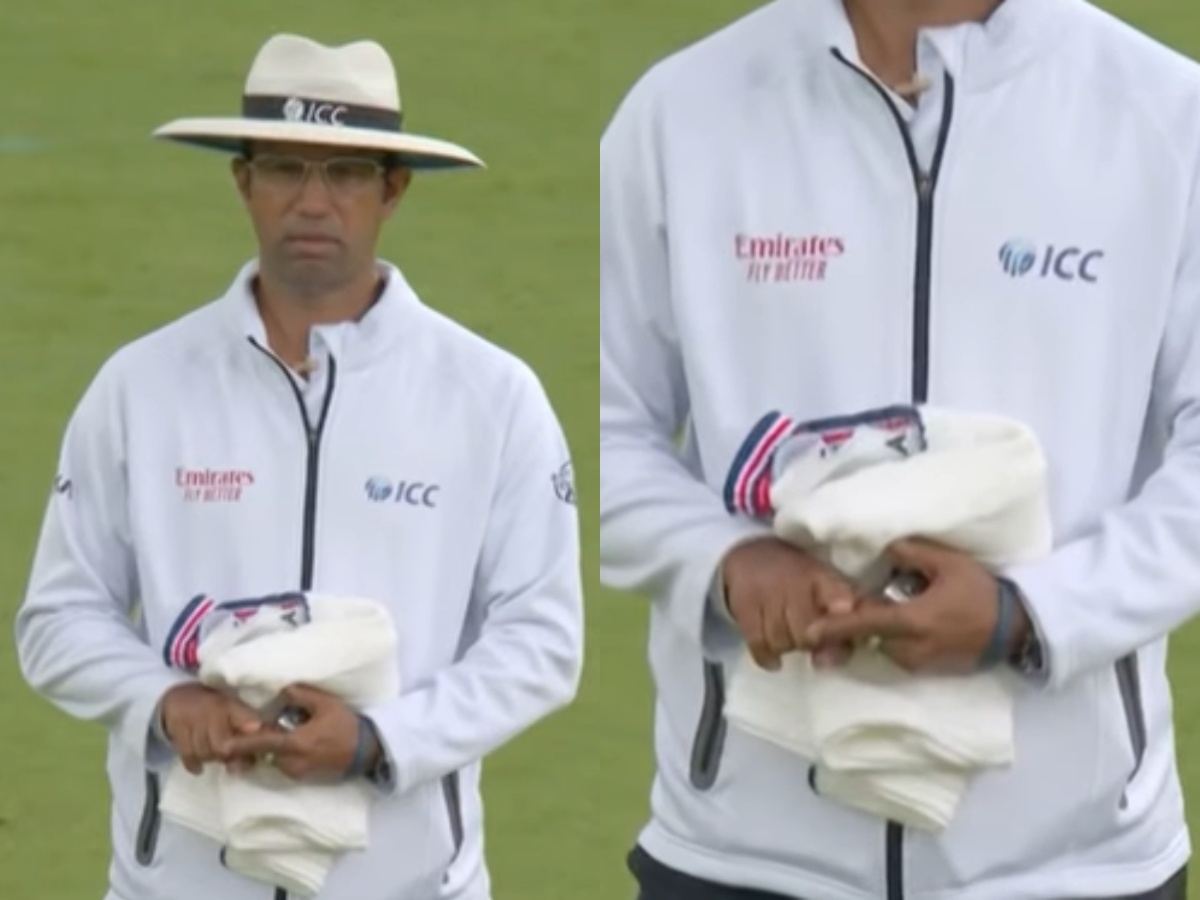
A small gesture from umpire Kumar Dharmasena has triggered a massive debate during Day 1 of the 5th Test between India and England at The Oval. The incident occurred in the 13th over when Josh Tongue’s inswinging yorker struck debutant Sai Sudharsan on the pads. England appealed loudly for LBW, but Dharmasena turned it down.
What caused the controversy was not the decision itself but his body language. Cameras caught Dharmasena subtly spreading his fingers, which many interpreted as a sign indicating an inside edge. Seconds later, England chose not to review. Replays confirmed the ball had touched the bat, validating the umpire’s call, but also raising questions about whether the gesture influenced England’s choice.
Fans on social media were quick to react. Some accused Dharmasena of helping England save a DRS, while others saw it as unintentional body language. Terms like “bias” and “favouritism” trended online, with many Indian supporters pointing out his history of controversial moments in international cricket.
According to ICC rules, umpires are not supposed to offer hints or gestures during appeals beyond giving the decision. Critics argue that even a small signal can affect a team’s review strategy, especially in high-stakes matches.
Meanwhile, India had a shaky start after losing the toss and being asked to bat under overcast skies. Yashasvi Jaiswal fell for 2, KL Rahul for 14, leaving India at 72/2 when lunch was taken. Sai Sudharsan, who had just survived the LBW call, continued batting with captain Shubman Gill.
Whether Dharmasena’s action was deliberate or just instinctive, the debate highlights how crucial umpire conduct is in the DRS era. Even the right decision can leave behind questions if the process looks questionable.