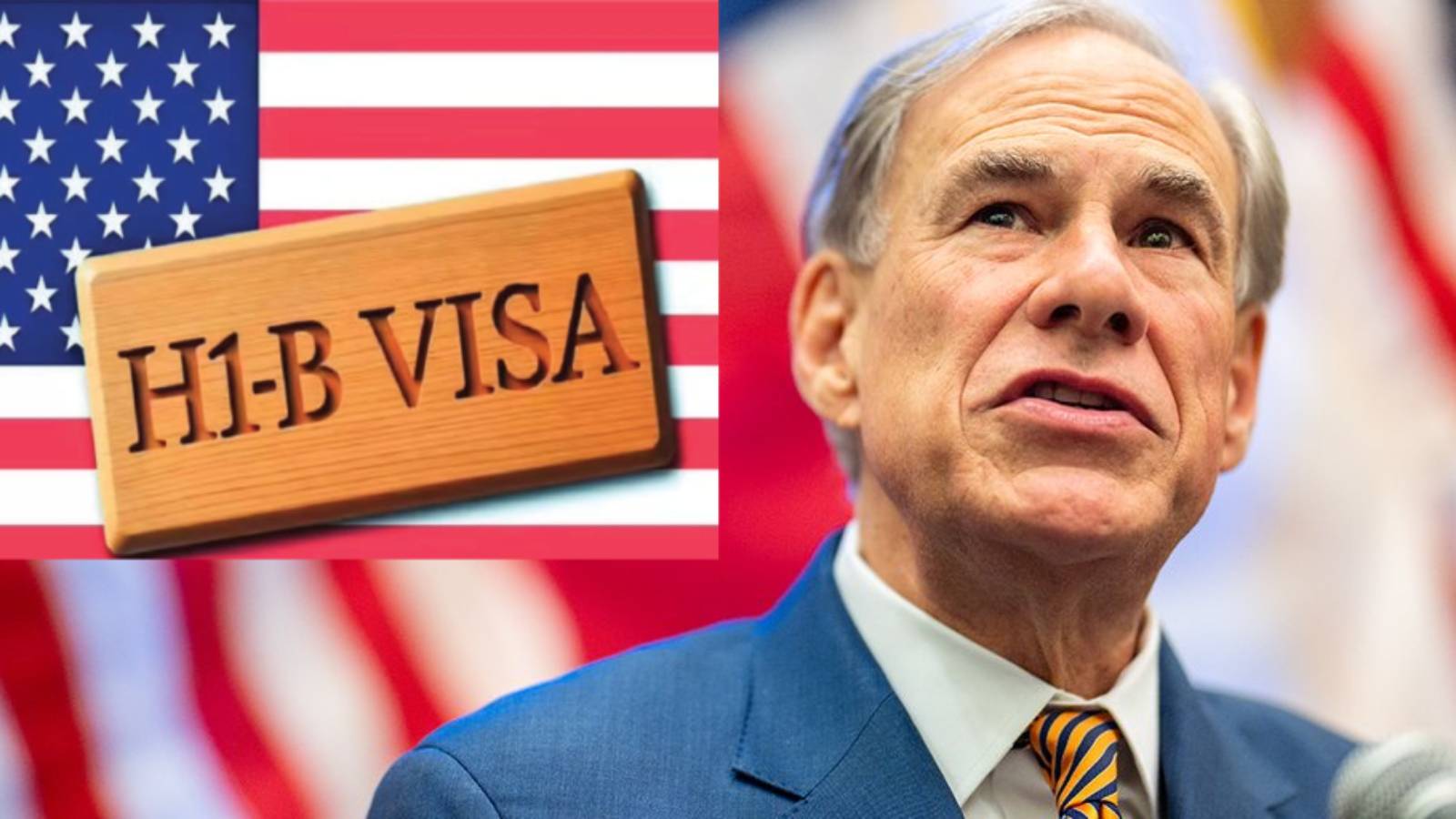
Texas Governor Greg Abbott has issued a new executive order that directly affects foreign workers. You now face a complete halt on H-1B visa sponsorship across all Texas state agencies, including public universities, until the next legislative session begins.
State agencies barred from new H-1B sponsorships
Under this order, state agencies can no longer file new H-1B petitions. You should note that the restriction applies only to fresh applications. Existing H-1B holders working with state institutions remain unaffected.
Texas leaders back the visa freeze
Several Texas leaders support this move. They argue that H-1B sponsorship pushes local workers aside. Abbott has made it clear that you should expect state-funded jobs to prioritise qualified Texas residents.
Trump-era immigration policies seen as trigger
Experts link this decision to earlier immigration reforms under the Trump government. The $100,000 H-1B fee for new petitions has already strained public institutions. Many agencies stopped sponsoring visas due to rising financial pressure.
Universities and hospitals raise alarm
You are now seeing strong reactions from universities and medical centres. Hospitals in Dallas, Texas alone sponsor hundreds of global specialists. Reddit discussions show deep concern about losing access to specialised international talent.
Impact on education and healthcare quality
Many users point out that universities and hospitals depend on global expertise. You may see innovation slow as this rule prioritises local hiring over research growth and global collaboration across scientific and medical fields.
K-12 schools remain exempt for now
Public K-12 schools do not fall under this freeze. Teachers on visas continue to play a key role in bilingual education. This exemption exists to address ongoing shortages in specialised teaching roles.
Wider implications for Texas and beyond
This move reflects rising anti-immigrant sentiment in the US. Experts say you should expect a serious decline in education and healthcare standards in Texas. There is also speculation that other states will adopt similar restrictions.