The golden rule of Twitter has officially been rewritten: if it exists, it can be weaponized into a fan war.
For the longest time, regional cinema rivalries were predictable. Fans locked horns over box office collections, screen counts, and whose favorite star delivered the bigger blockbuster. But recently, a fascinating and slightly bizarre shift has taken place. The battlefield has shifted from star power to ancient scriptures, all triggered by a piece of fiction.
When the sci-fi epic Kalki 2898 AD hit theaters, it used the Mahabharata as a creative launching pad. It was, by all accounts, the director’s imaginative reimagining, a blend of ancient lore and futuristic fantasy.
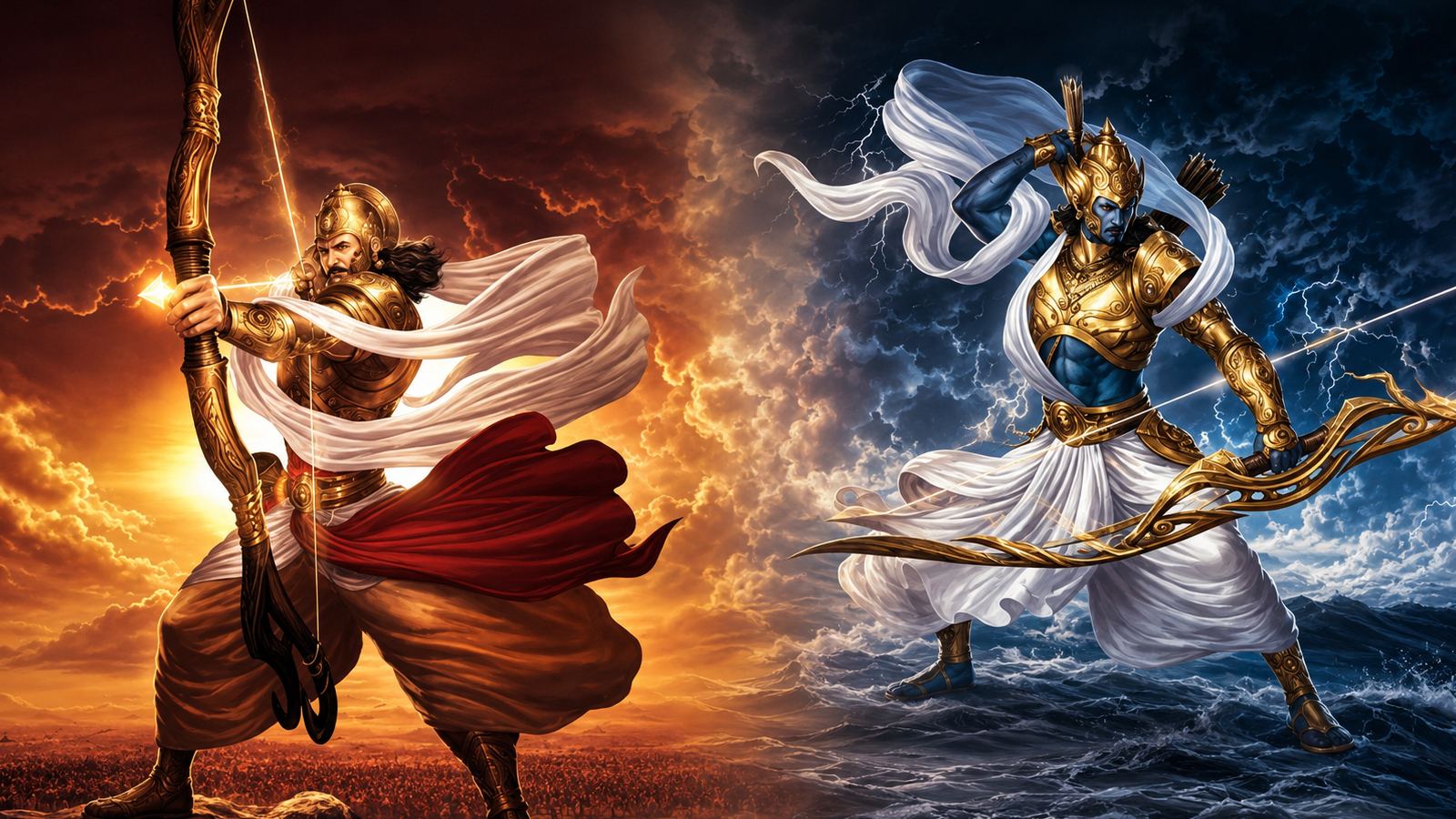
Yet, instead of enjoying the cinematic liberty, Twitter timelines erupted into a fierce theological debate. Suddenly, feeds were flooded with screenshots of translated texts, arguments over the Drona Vadha Parva, and aggressive debates over whether Karna was glorified at the expense of Arjuna.
Even the director found himself dragged into the digital arena, responding in Twitter replies with page references to academic translations just to defend his narrative choices.
It highlights a strange new reality in modern pop culture: the inability to separate a fictional adaptation from historical text. When a creative cinematic choice is treated as a personal attack on mythological accuracy, the line between art and dogma blurs.
In the end, as the famous Telugu poet Sri Sri once suggested that anything can be a subject for poetry, modern internet culture has proven that absolutely anything can be the subject of a toxic fan war. Even millennia-old epics aren’t safe from the wrath of a disgruntled Twitter timeline.