Amaravati’s real transformation is now being driven less by buildings and more by connectivity. Roads, expressways, and regional links are slowly emerging as the backbone of the capital’s revival, shaping how quickly it can function as a true administrative and economic hub.
The biggest shift is in how Amaravati is being positioned geographically. Instead of remaining an isolated capital project, it is now being integrated into a larger transport network that connects key cities and economic zones across Andhra Pradesh and beyond. That change makes the entire plan feel more practical.
The Vijayawada bypass road has already improved access to the capital region, easing traffic flow and reducing congestion. It may look like a basic step, but it matters because smooth local connectivity is what keeps daily administrative activity running without delays.
Looking ahead, the proposed 189.4 km Outer Ring Road is expected to play a major role. Planned as a six-lane, access-controlled corridor, it is not just about easing traffic. Ring roads usually end up shaping how cities expand, and over time, they attract real estate, logistics, and industrial activity along their stretch. In Amaravati’s case, this could quietly define how the city grows.
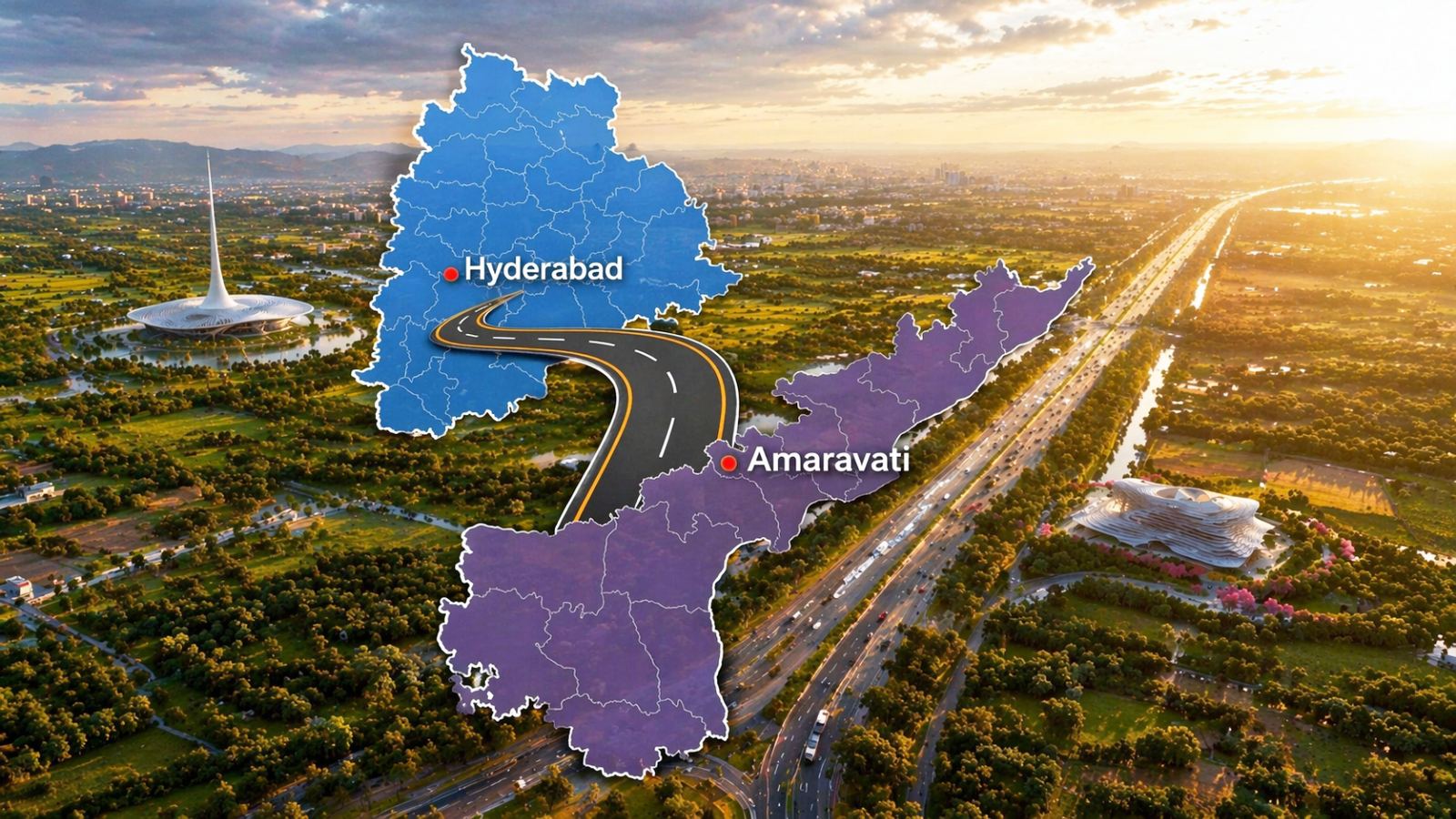
At the same time, greenfield expressways are adding a wider reach. The proposed Shamshabad to Amaravati expressway, connecting to Hyderabad’s airport, will improve connectivity between the two regions and make travel faster and more reliable. Another corridor linking Karnataka to coastal Andhra, with access to Amaravati, further strengthens this network and adds to its regional importance.
Rail connectivity is also being strengthened alongside these plans. A 57 km railway line from Errupalem to Namburu via Amaravati is expected to move forward soon. This becomes important because it connects Amaravati more directly to the broader railway network, reducing dependence on nearby junctions and improving both passenger and freight movement.
What stands out now is the multi-layered approach. Internal roads, bypasses, ring roads, expressways, and rail links are all being developed together. This is not just about mobility, but about making Amaravati accessible, investable, and easier to function as a capital.
Of course, everything comes down to execution. Plans look good on paper, but steady progress on the ground is what will matter. Still, compared to earlier phases, this approach feels more structured and grounded.
In the end, connectivity may turn out to be Amaravati’s biggest strength. If these networks fall into place as planned, the city has a better chance of moving from isolation to integration, and that could make all the difference in the long run.