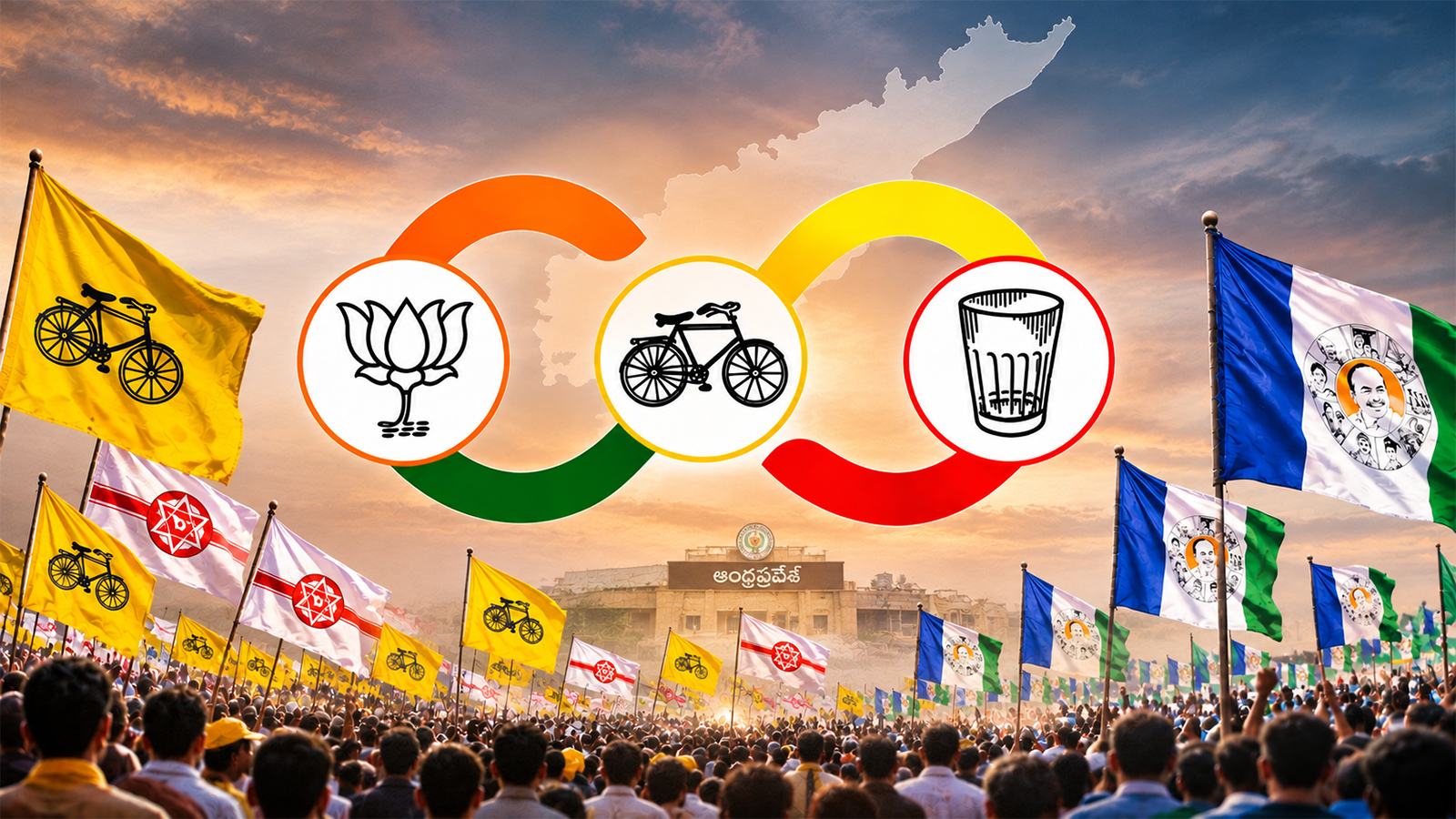
Cross-voting emerged as a significant factor in the Andhra Pradesh MPTC and ZPTC election results, with the ruling TDP-Jana Sena-BJP alliance and opposition YSRCP witnessing contrasting outcomes in several mandals. Parties that secured a majority of MPTC seats sometimes lost the corresponding ZPTC contests.
The results declared on Saturday, November 7, revealed differences in voting patterns across NTR, Krishna, Eluru, East Godavari and Chittoor districts. Local political equations and candidate preferences appear to have influenced several contests.
In NTR district, YSRCP candidates won the Jaggayyapeta and Veerullapadu ZPTC seats despite the ruling alliance securing more MPTC seats in both mandals.
YSRCP candidate M. Srinivasa Rao won the Jaggayyapeta ZPTC seat by 1,108 votes against Jana Sena candidate Prahlada Rao. The alliance secured a reported 50.62 per cent of votes in the MPTC elections but received 46.51 per cent in the ZPTC contest.
YSRCP, meanwhile, secured 49.25 per cent of the ZPTC vote in Jaggayyapeta, compared with 46.83 per cent in the MPTC elections. The difference contributed to the contrasting results in the two tiers.
In Veerullapadu, YSRCP candidate Venkata Krishna Reddy defeated Jana Sena candidate Rajasekhar by 491 votes. However, TDP won 11 of the 14 MPTC seats, leaving YSRCP with three.
The alliance received 52.76 per cent of the MPTC vote in Veerullapadu but secured only 48.40 per cent in the ZPTC contest. The difference proved significant in the closely contested election.
A similar outcome was reported in Krishna district’s Gannavaram mandal. YSRCP candidate Anagani Ravi defeated BJP candidate Ch. Kumaraswamy by just 63 votes in the ZPTC election, although the ruling alliance won 18 of the 24 MPTC seats.
In Eluru district’s Buttayagudem mandal, the alliance won nine of the 15 MPTC seats, while YSRCP secured five and CPM one. However, YSRCP candidate Balakrishna won the ZPTC seat by 602 votes.
East Godavari district’s Korukonda witnessed the opposite pattern. YSRCP won 12 MPTC seats against the alliance’s 11, but the alliance candidate secured the ZPTC seat by a margin of 602 votes.
In Chittoor district’s Penumur mandal, TDP secured the ZPTC lead despite YSRCP winning seven of the 12 MPTC seats. TDP managed five MPTC victories. A recount was scheduled for Sunday following a request from the TDP candidate seeking verification of the margin.
Karvetinagaram in Chittoor district recorded another contrasting result. YSRCP won the ZPTC seat, while TDP secured nine of the 14 MPTC seats, leaving five for YSRCP.
The results indicate that winning more MPTC seats did not necessarily guarantee victory in the corresponding ZPTC election. Both the ruling alliance and YSRCP benefited from such differences in voting patterns in individual mandals.
Political observers have also pointed to candidate selection, local leadership and coordination among alliance partners as possible factors. However, the results alone do not establish the precise reasons behind voters’ choices.
The contrasting outcomes highlight the importance of local political factors in Andhra Pradesh’s parishad elections, even as the TDP-led alliance secured a substantial majority of seats across the state.