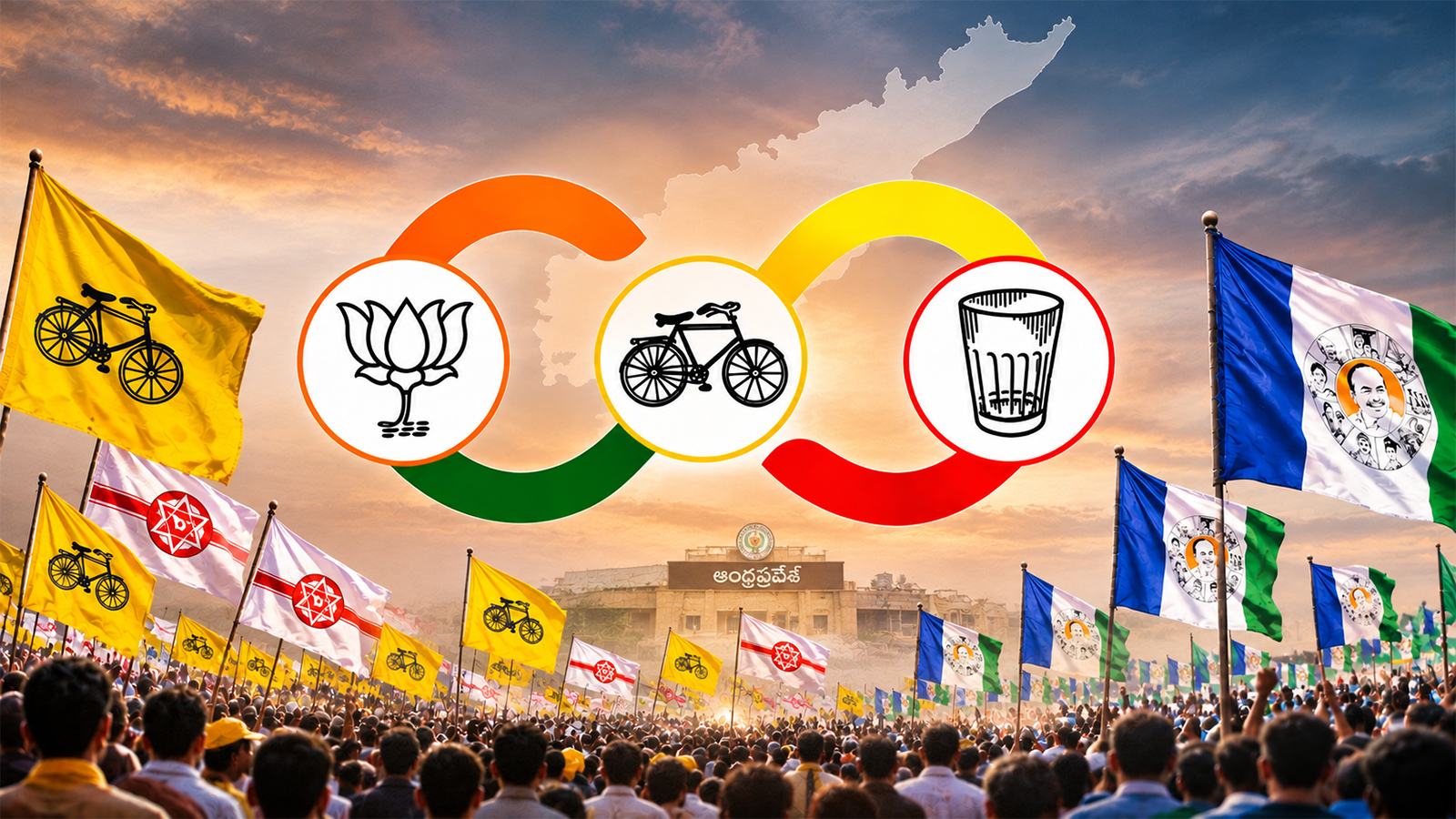
The November 7 MPTC and ZPTC election results point to a significant shift in rural Andhra Pradesh politics. The TDP-led alliance has made strong gains across several districts, while the YSRCP has struggled to retain its influence in many constituencies. From Palnadu to Chittoor and Nellore, the results reflect the alliance’s growing grassroots presence.
More than the overall seat tally, the results are significant because several politically influential leaders and their families have faced setbacks.
Alliance makes strong gains across districts
The former Chittoor region has delivered a particularly strong performance for the alliance. In Chittoor district, the alliance secured 16 of the 27 ZPTC seats, including unanimous victories. TDP candidate Radhika won Nagari by 2,562 votes.
In Tirupati district, the alliance secured 19 of the 35 ZPTC seats. Its MPTC performance was also strong, with 278 victories reported in the 302 contested seats. Annamayya district followed a similar pattern, with the alliance securing 18 of the 25 ZPTC seats, including unanimous wins.
Anakapalli also emerged as a strong region for the alliance. TDP candidates won several ZPTC seats, including Narsipatnam, Achutapuram, Anakapalli, Chodavaram and Golugonda. Jana Sena won Yelamanchili, Buchayyapeta, Paravada, Rambilli and Sabbavaram. BJP secured Kasimkota and Payakaraopeta.
However, the result in Nakkapalli was different. YSRCP candidates won both MPTC seats, including Nakkapalli-2, where Home Minister Vangalapudi Anitha resides.
Palnadu delivers one of the biggest verdicts
Palnadu produced one of the strongest performances for the ruling alliance. TDP and Jana Sena won all 10 ZPTC seats that went to polling. Another 18 had already been decided unanimously in the alliance’s favour.
The district also recorded some of the biggest victory margins in the state. TDP candidate Dr Nagothu Venkata Lakshmi Saroja won Nakirikallu by 32,919 votes. Jana Sena’s Pamidipati Srinivasa Rao won Krosuru by 30,273 votes, while Singamshetty Venkata Bala Prasad secured Nuzendla by 28,863 votes.
TDP candidates also won Machavaram by 22,882 votes, Piduguralla by 20,167 votes and Gurazala by more than 17,000 votes.
These margins underline the scale of the alliance’s performance in the district.
Vizianagaram: Botsa family faces a setback
One of the most closely watched contests was in Bondapalli, where YSRCP leader Botsa Satyanarayana’s daughter Anusha contested for the ZPTC seat.
TDP candidate Pashala Neeraja defeated her by 5,136 votes. Anusha was considered a contender for the Zilla Parishad chairperson post, making the defeat particularly significant for the Botsa family.
Botsa’s daughter-in-law Poojitha won Garividi, while his sister Sangamreddy Venkatalakshmi contested from Gurla. His nephew Chaitanya’s nomination from Pusapatirega was rejected.
The result was not entirely unfavourable to the family. Poojitha’s victory shows that Botsa continues to have support in parts of the district. However, Anusha’s defeat raises questions about the family’s ability to retain its earlier political influence.
The victory of Majji Siri Sahasra in Therlam adds another dimension. She is the daughter of former ZP chairman Majji Srinivasa Rao, who left YSRCP and joined TDP after differences with Botsa. Her victory reflects the changing political equations in Vizianagaram.
Nellore and Guntur add to alliance gains
Nellore district also recorded a strong TDP performance. The party won the Venkatagiri, Duttaluru and Chejerla ZPTC seats. In Nellore Rural, TDP swept all 12 MPTC seats along with the ZPTC seat.
In Atmakur, TDP candidate Sumathi defeated her rival by 189 votes in Brahmanapalli, the native village of MLA Mekapati Vikram Reddy.
The Thamminapatnam MPTC result in Chillakur was decided by just one vote after a recount. TDP candidate Aruna eventually emerged victorious.
In Ponnur, TDP won all 13 MPTC seats it contested, while Jana Sena won all three seats it contested. Together, the alliance secured all 16 seats.
Not every region followed the same trend
The results in Alluri Sitarama Raju district presented a different picture. YSRCP candidates won Ananthagiri and Peda Bayalu, while TDP secured Koyyuru. YSRCP was also leading in Dumbriguda and G. Madugula in the reported update.
In Parvathipuram Manyam, TDP won Jiyyammavalasa, Pachipenta and Palakonda. Jana Sena secured Veeraghattam, while YSRCP won Seethampeta.
Gummalakshmipuram was another difficult area for the alliance. YSRCP candidates won six of the 14 MPTC seats and were leading in five more. TDP had won only three in the reported update.
These results show that local political equations continue to influence voting patterns, even when one alliance enjoys a wider advantage across the state.
Counting controversies add to political tension
The counting process also witnessed protests. Former minister RK Roja staged a protest at Nagari Degree College over the Illathuru MPTC result. The Returning Officer declared the TDP candidate the winner by three votes. Roja and the YSRCP candidate demanded a recount.
During the protest, Roja pushed aside a woman constable. Police later removed the protesters from the counting centre. She continued raising slogans against the government from her car. Her reaction after her personal assistant handed her a water bottle also attracted attention.
In Railway Koduru mandal, former MLA Koramutla Srinivasulu staged a protest at Anantarajupeta, demanding a recount.
The larger political message
The Parishad results show that the TDP-led alliance has built considerable strength at the grassroots. Its performance in Palnadu, Chittoor, Tirupati, Annamayya, Nellore and Anakapalli reflects a broad electoral advantage.
For YSRCP, the results raise questions about its local organisation and its ability to retain traditional support. The defeat of Botsa Anusha and the results in politically significant constituencies add to the party’s challenges. However, victories in parts of Alluri, Kadapa and other pockets show that the opposition still has a presence. The challenge for YSRCP is to rebuild its local network and reconnect with voters.
For the ruling alliance, the next task is to convert electoral support into visible rural development. Roads, drinking water, agriculture and local infrastructure will matter more than victory celebrations.
The November 7 verdict is a strong indication that rural political equations in Andhra Pradesh are changing. The alliance has gained considerable ground, but sustaining that support will depend on its performance beyond the ballot box.