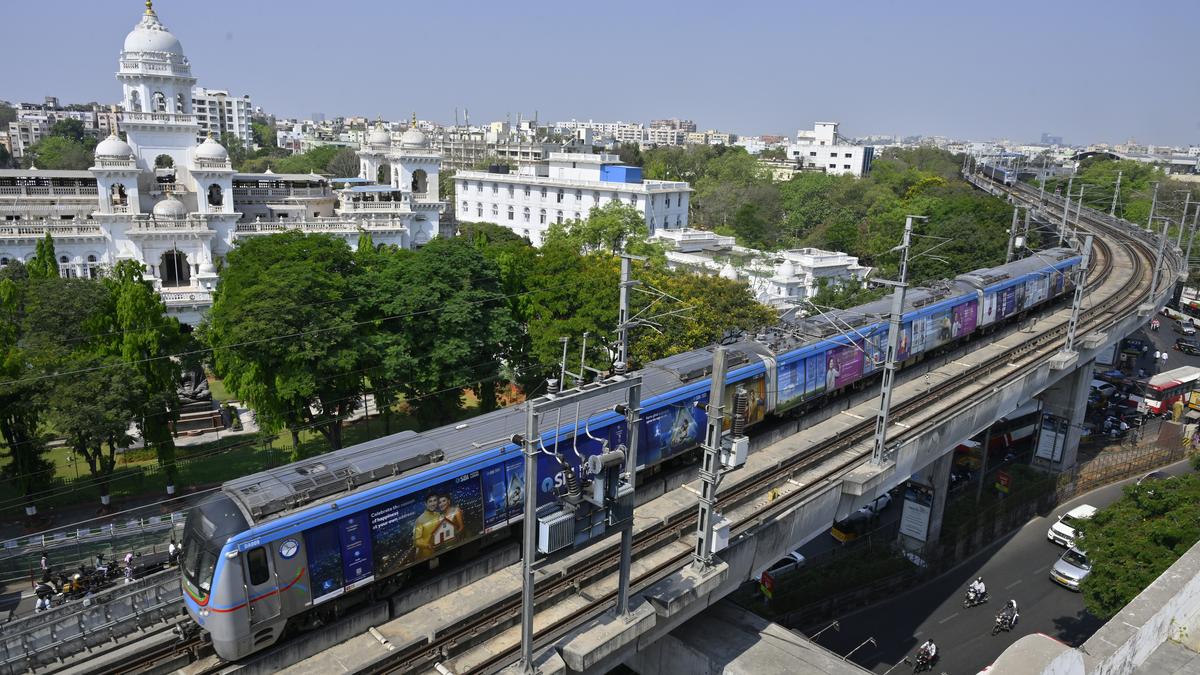
The Telangana Government has taken full control of the Hyderabad Metro Rail Project after buying out L&T’s stake. With this, the entire project is now government-owned.
L&T had spent about ₹14,000 crore, including ₹7,000 crore in losses, and carried a debt of ₹13,000 crore. Altogether, the burden stood at nearly ₹27,000 crore. The state offered a one-time settlement of ₹2,000 crore, which L&T accepted.
By paying ₹2,000 crore, the Government acquired L&T’s ₹5,900 crore stake and also took over the ₹13,000 crore loan. The land parcels given to L&T will return to the state, which can now monetise them.
The Government pushed this deal quickly to integrate Phase 1 with the upcoming Phase 2. The expansion plans cover 163 km, including airport connectivity, with an estimated cost of ₹24,000 crore.
Hyderabad Metro, the country’s first PPP model in metro rail, has turned into a failed experiment. This raises two serious concerns. First, it discourages private firms from investing in metro projects elsewhere, including the planned Visakhapatnam and Vijayawada metros in Andhra Pradesh.
If a giant like L&T suffered such losses, other companies will hesitate. Yet, state governments lack funds to handle entire projects alone, while the Centre has already been reluctant to provide support. Future metro projects may struggle to take off.
The second concern is the Hyderabad Metro’s future. The state must now manage both Phase 1 operations and Phase 2 construction. Governments have repeatedly shown limits in running large-scale projects.
L&T’s biggest loss came from low, people-friendly ticket prices that made operations difficult. For a government-run metro, the challenge only grows. Balancing affordable fares with financial sustainability will decide the road ahead.