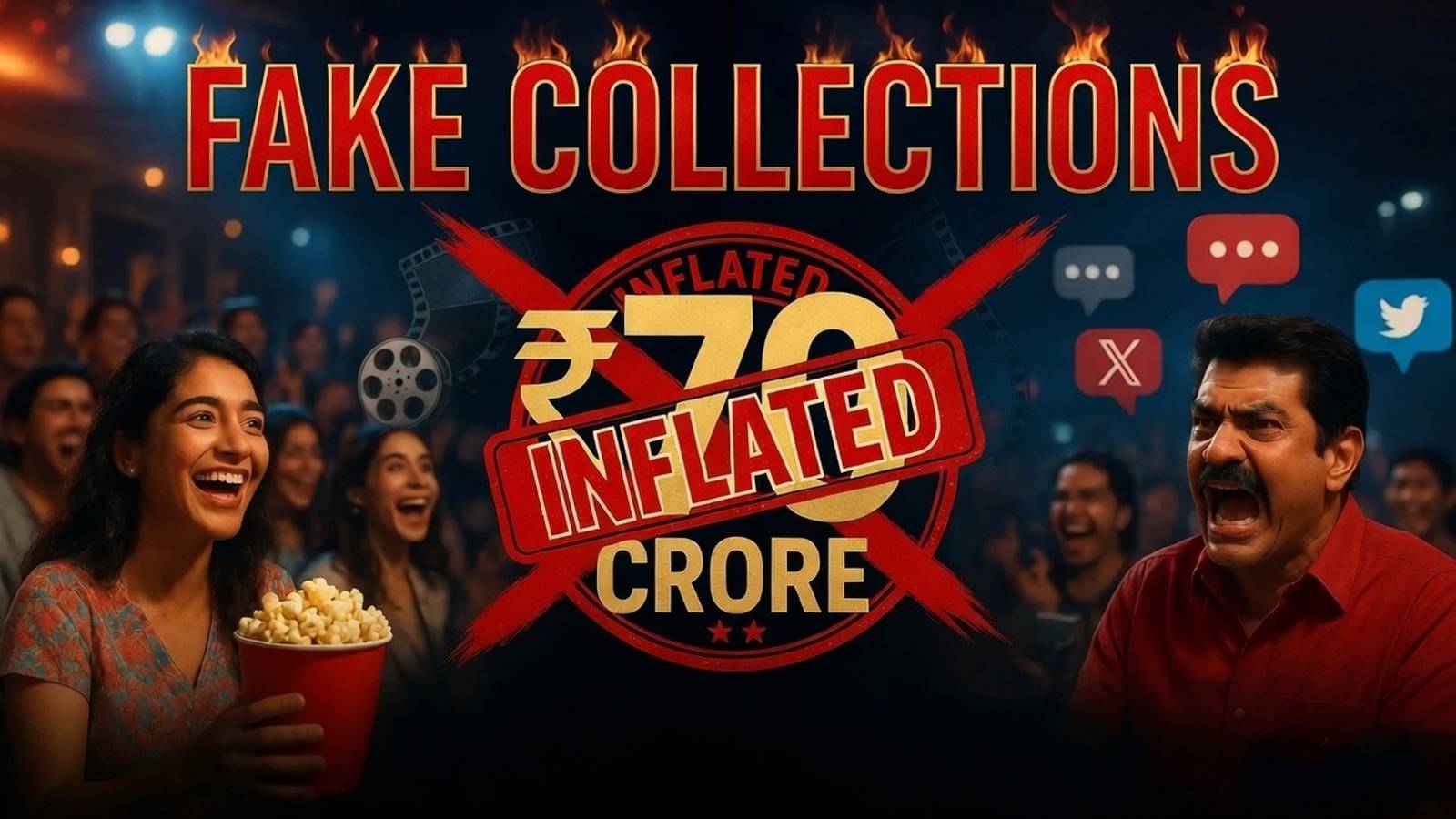
A recently released film is doing well at the box office. The ticket buying public has liked the film. Fans are celebrating a long-awaited success.
Which is exactly why one question is now being asked on social media: Why release collection posters with heavily inflated numbers?
According to trade estimates, the film’s worldwide gross after its opening weekend is believed to be in the Rs. 38–40 crore range. However, the official poster released by the makers projects a figure close to Rs. 70 crores, triggering fresh debate among movie buffs and trade followers.
The backlash isn’t about the film’s performance. In fact, most trade analysts agree that it has opened well and is on track to become a big success. Their concern is that overstating the collections by such a huge margin only creates unnecessary controversy around an otherwise positive theatrical run.
Many fans have been posting comments along the lines of: “The film is doing well. Everyone is happy for its success. Why not celebrate the real numbers? Why exaggerate and invite trolling? Don’t kill the positivity around a genuine success.”
Interestingly, this isn’t the first time the same production house has faced such outrage. Earlier this year during Sankranti, another film produced under the same banner also sparked controversy over its official collection posters. That episode left many wondering why such aggressive inflation was necessary, especially when the film eventually went on to perform well.
That is what makes the comparison with Maa Inti Bangaaram interesting. Despite becoming one of the year’s biggest blockbusters, its team waited until the film had genuinely come close to the milestone before unveiling the Rs. 100 crore worldwide poster. They could have released the poster much earlier but instead chose to wait for the numbers to catch up. That control to avoid exaggeration earned appreciation from both trade circles and fans.
In today’s social media era, box-office claims are scrutinized almost instantly. Trade trackers, exhibitors, and overseas market data make it difficult for inflated figures to go unquestioned. When a film is already winning, exaggerated collection posters often end up doing more harm than good. Instead of celebrating the film’s success, they shift the conversation toward an unnecessary debate over numbers.