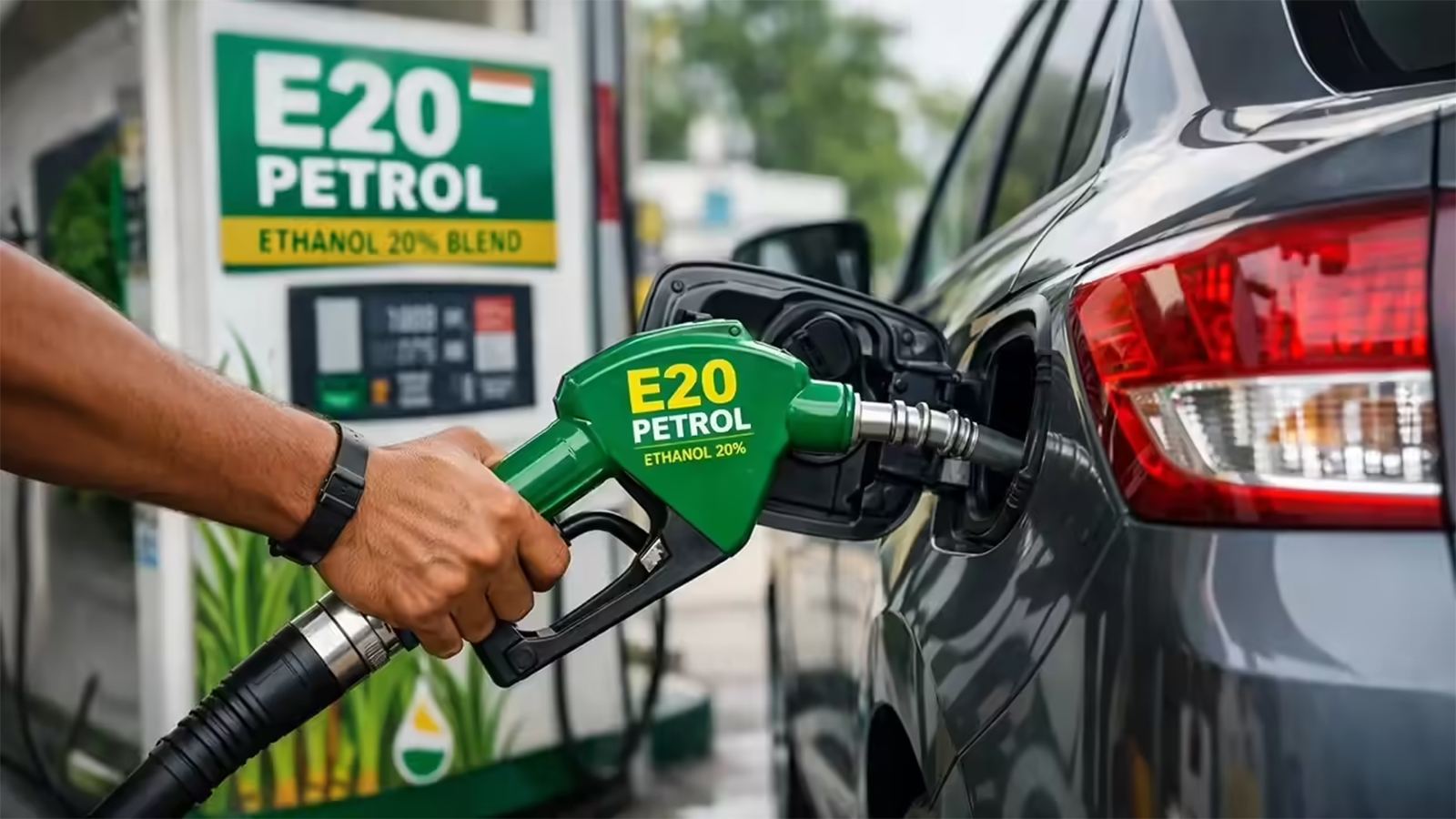
The central government has officially directed state-run and private oil marketing corporations to begin setting up the necessary retail infrastructure to support multiple ethanol-blended petrol options across the country.
Fuel stations will soon offer a range of variants, including E20, E22, E25, and E30 petrol, turning fuel pumps into a supermarket-style setup where consumers choose their blend based on engine compatibility.
This directive follows new technical guidelines from the Bureau of Indian Standards, which recently established formal quality specifications for fuel blends extending up to 30 percent ethanol.
This infrastructure upgrade represents the next phase of India’s aggressive Ethanol Blended Petrol program as the country moves beyond its current standard baseline.
To successfully roll out these multiple choices, fuel retailers like Indian Oil Corporation, Bharat Petroleum, Hindustan Petroleum, Jio-bp, Nayara Energy, and Shell must upgrade their retail outlets.
Outlets will have to invest in separate dispensing systems, underground storage tankages, blending control technologies, and quality monitoring mechanisms.
Fortunately, many station operators believe the physical transition can be smoothly integrated into existing setups.
Current modern dispensers already seamlessly isolate and manage separate nozzles for standard petrol, premium variants, and diesel, meaning the same core systems can be systematically expanded to accommodate the higher blends.
Clear consumer transparency will be strictly mandated at the pump to prevent misfueling mistakes.
Retailers will be required to display prominent labels and precise information regarding the exact ethanol blend on each dispensing machine, allowing drivers to easily match the fuel to their vehicle’s manufacturer guidelines.
While the actual retail prices of the new variants have not yet been formalized under a fixed national pricing policy, the cost of each grade is expected to vary based on the overall percentage of ethanol used.
Since domestically produced ethanol features lower raw feedstock costs compared to imported crude oil, higher ethanol mixtures are anticipated to carry a retail discount to help incentivize consumer adoption.
The primary catalyst driving this rapid policy movement is a massive domestic production surplus.
By March 2026, national ethanol production capacity expanded to approximately 20 billion liters, leaving a massive cushion over the 11 billion liters required annually to satisfy the baseline blending mandate.
By opening the market to higher retail blends like E30, the government can effectively utilize this excess domestic supply.
The strategy aims to support rural agricultural distilleries, reduce carbon emissions, and insulate the country from volatile global crude oil supply routes linked to international supply chain disruptions.