What began as a moment of joy for Bengaluru ended in loss, shock and unanswered questions.
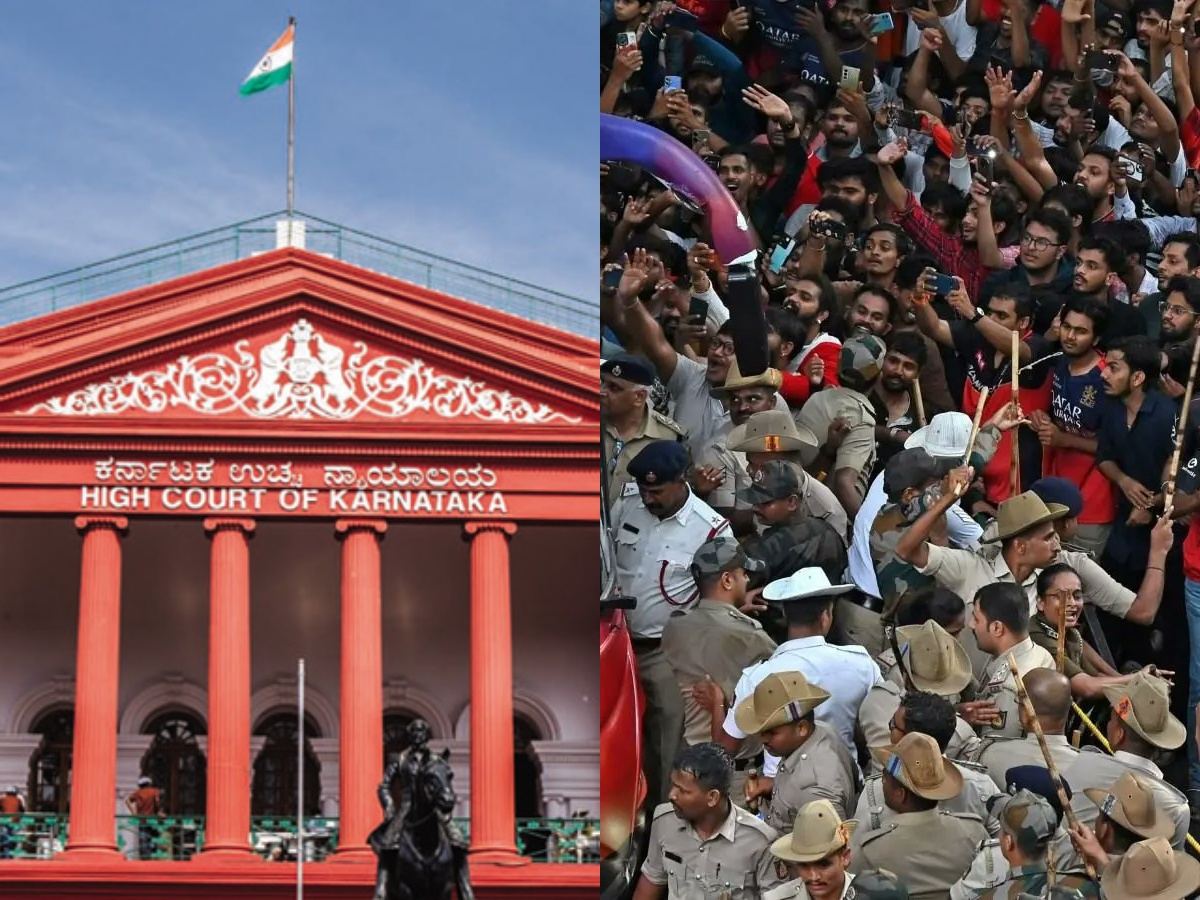
The Royal Challengers Bengaluru (RCB) parade on 4th June turned into a tragedy as a stampede near the M. Chinnaswamy Stadium claimed 11 lives.
Days after the incident, the Karnataka government submitted a detailed report to the High Court which has now been made public.
The report clearly blames RCB management for the chaos, citing multiple procedural lapses, poor planning and reckless promotions as the reason for the deadly crowd surge.
According to the government’s findings, RCB along with its event partner DNA Networks and the Karnataka State Cricket Association (KSCA) went ahead with the victory celebrations without securing proper permissions.
A letter was sent on 3rd June at 6:30 pm just hours before the final was played in Ahmedabad against Punjab Kings where the KSCA CEO informed the Cubbon Park police that the team was planning a parade if they won.
But this was not a formal request, just an intimation. And in matters of public gatherings of this scale, rules are clear: permissions must be formally sought at least 7 days in advance with full details.
The police denied the request citing short notice and lack of clarity on expected crowd size, security plans and possible traffic bottlenecks.
Despite this RCB didn’t stop. The very next morning at 7:01 am on 4th June, they posted an open invitation to fans on their social media handles, announcing a victory parade from Vidhana Soudha to Chinnaswamy Stadium.
A second post followed at 8:00 am, again promoting the event. Then came the turning point at 8:55 am, a video of Virat Kohli was posted on RCB’s handle where he said the team would celebrate with the people of Bengaluru later that day.
This video went viral and added fuel to the already rising excitement. By the time RCB posted a message at 3:14 pm saying fans would need free passes available on their website, thousands had already started gathering outside the stadium.
The report says this last minute change in instructions caused mass confusion and frustration especially among those who had travelled long distances to be part of the celebration.
The government pointed out that the massive crowd was not unexpected given the engagement on RCB’s posts was over 44 lakh.
Based on Metro usage data and visual assessments the crowd was estimated to be over 3 lakh.
Instead of cancelling the event at the last minute which officials feared could lead to panic and violence, the authorities decided to let it go ahead in a scaled down format and deployed additional police to control the situation.
In the chaos that followed people were crushed in the crowd and 11 fans lost their lives a tragic end to what was supposed to be a celebration.
The report also says RCB didn’t follow the procedure outlined in the Licensing and Controlling of Assemblies and Processions (Bangalore City) Order, 2009.
There was no formal requisition, no route plan, no coordination with civic agencies and no safety roadmap.
The entire event was built around social media momentum with very little groundwork or legal compliance.
Now that the report is out in the open questions are being raised not just about who was responsible but why there was such a rush in the first place.
A little more time could have allowed for better preparation, proper permissions and smoother crowd control. Even outstation fans could have joined safely.
But in their rush to ride the wave of victory the organisers overlooked the most basic thing public safety.
This wasn’t an unpredictable accident. It was the result of poor decisions and avoidable mistakes.
11 lives were lost because a celebration was turned into a stampede by lack of planning and unchecked excitement.
The High Court’s decision to make the report public brings some transparency but it doesn’t take away the pain.
What remains to be seen now is whether real accountability follows and whether lessons will finally be learned before another celebration turns into a disaster.