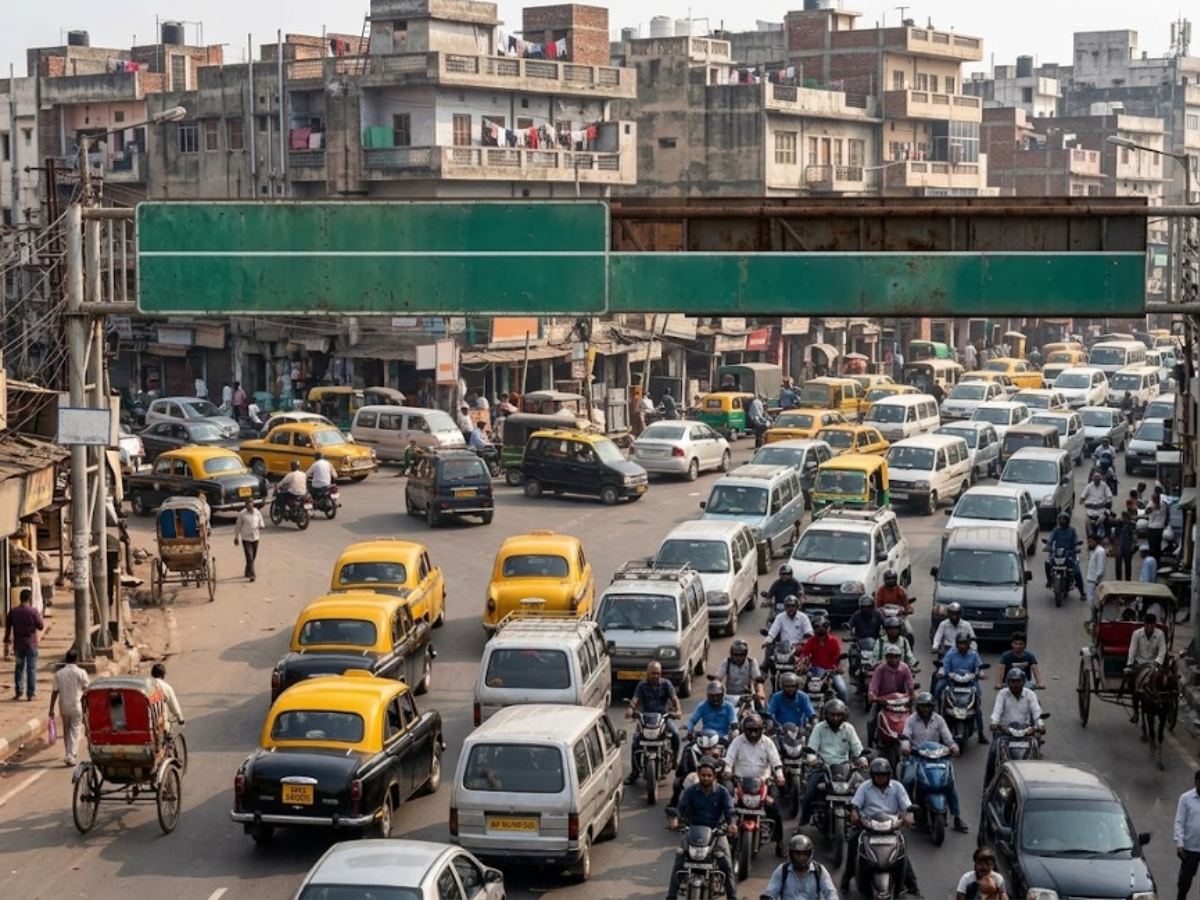
Bengaluru has always had a complicated relationship with its roads. A city that builds software for global clients still finds itself buried in bumper-to-bumper gridlock on Outer Ring Road most evenings. But something has shifted. Over the past few years, the city’s traffic management infrastructure has grown more sophisticated, and drivers have started noticing in ways they didn’t expect.
How the camera network actually works
The Bengaluru Traffic Police, working alongside the Karnataka government, has rolled out an extensive network of AI-powered cameras across major junctions. These aren’t the old CCTV units that recorded footage for someone to review whenever they got around to it.
The newer systems use automatic number plate recognition (ANPR) to catch violations in real time. Red light jumping, overspeeding, riding without a helmet, stopping beyond the zebra crossing – each one triggers an automated challan tied directly to the vehicle’s registration number.
What separates this from traditional policing is the removal of human discretion at the moment of violation. A camera at Silk Board junction captures the plate, cross-references it against the Parivahan database, and generates a Bangalore traffic challan notice that arrives via SMS within a short span of time. For many drivers, the first surprise was getting fined for something they didn’t know was being monitored.
The system processes thousands of violations daily. Any commuter who uses the Hebbal flyover stretch or the Electronic City corridor regularly already knows those cameras operate continuously. People have adapted, slowing down and holding their lane, because the fine arrives fast and the cost-benefit calculation shifted.
The behavioural ripple effect
Traffic enforcement works when people believe they’ll get caught. Bengaluru’s camera density has crossed that psychological threshold in several high-traffic zones, and the effect on behaviour is measurable. Drivers who used to treat amber lights as a cue to accelerate now brake earlier at monitored junctions. The calculation changed; the behaviour followed.
The shift isn’t uniform. Areas with thinner camera coverage, including large parts of the northern suburbs and Whitefield’s interior roads, still operate under older patterns. Drive from MG Road toward regions with thinner camera monitoring and you can feel the behavioural change dissolve. That gap matters, and consistent enforcement density does more than occasional crackdowns that everyone knows won’t persist.
One consequence that caught many people off guard is how drivers now handle pending challans. Previously, ignoring a paper notice wasn’t particularly difficult. That doesn’t work anymore. Digital integration with vehicle registration databases means pending challans surface during insurance renewals, vehicle transfers, and fitness certificate applications, blocking these critical processes. The complications have become real enough that many vehicle owners now challan pay online to avoid delays at renewal time.
What the technology cannot fix
Smart cameras are good at catching clear, categorical violations: signal jumping, no helmet, overspeeding above a threshold. They’re not built for the messier, situational problems that define Bengaluru’s particular brand of road chaos. Wrong-side driving on narrow neighbourhood lanes, aggressive cutting on service roads, autos stopping mid-flow to drop passengers- these fall outside the tidy categories that automated systems handle well.
Road design is the other half of this problem, and it doesn’t get nearly enough attention. Ask any Bengaluru commuter about the Marathahalli bridge merge or the Sarjapur Road bottleneck. No camera system fixes a road that forces many lanes into lesser ones. Bengaluru’s traffic problem has always been partly structural, and technology layered on top of poor road geometry hits hard limits.
Weather makes it worse. Bengaluru’s monsoon months bring waterlogging that disrupts camera visibility and pushes drivers into unpredictable detour patterns around flooded stretches. During peak rains around Koramangala and Bellandur, survival driving takes over, rule-following drops, and the conditions the cameras were calibrated for are no longer present.
Where this is heading
The Karnataka transport department has been steadily tightening the integration between traffic cameras, the Vahan database, and digital payment infrastructure. Newer pilots involve speed-detection corridors, where average-speed cameras calculate travel time between two fixed points to determine whether a vehicle exceeded limits across an entire stretch, not just at one sensor. That is a meaningfully different enforcement model from a single fixed camera catching a momentary reading.
For regular commuters, the practical reality is straightforward: zones with active smart enforcement are becoming more orderly. Bengaluru’s roads aren’t getting wider anytime soon. Changing how people drive on the roads that already exist is the only lever with real scale. The cameras won’t resolve everything, but they have started a shift that most Bengaluru drivers can already feel.
Content Produced by Indian Clicks, LLC