As India aggressively races to establish massive digital infrastructure hubs, critics have frequently raised concerns about the heavy resource demands of hyperscale data centers.
Many of these apprehensions are imported directly from Western media, which heavily documents how data centers are overwhelming power grids across the United States.
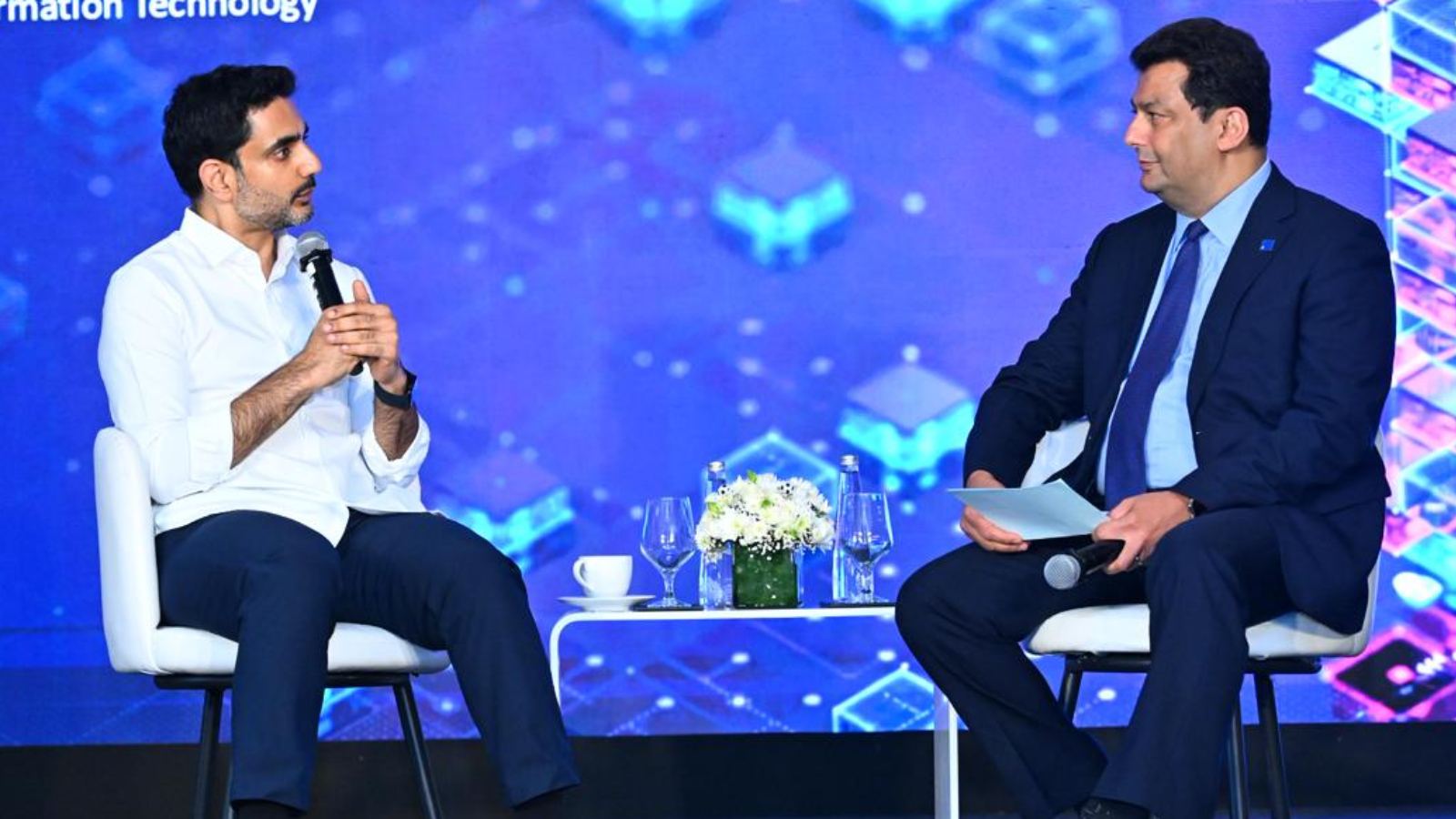
However, Andhra Pradesh IT and Industries Minister Nara Lokesh has firmly dismissed these comparisons, explaining why the American example is completely irrelevant to the Indian context.
The core of Lokesh’s argument rests on a massive structural difference: India operates under a unified “One Nation, One Grid” framework.
Unlike India, the United States does not have a single, interconnected national power grid.
Instead, the US power network is deeply fragmented, divided into three major independent balancing authorities and thousands of isolated, fractured local utilities.
When a massive data center cluster drops into a specific American state or county, it puts a crushing, localized strain on that specific regional utility provider. Because they cannot seamlessly draw surplus power from thousands of miles away, the local grid becomes incredibly vulnerable to blackouts and soaring energy costs.
India, on the other hand, operates on a completely modernized, nationally synchronized grid system.
If a data center hub in Visakhapatnam requires substantial power, the energy doesn’t have to be sourced strictly from local regional units.
Lokesh has emphasized that many data center apprehensions are based on incomplete information or an apple-to-oranges comparison with the West.
He pointed out that the physical realities of resource consumption are also heavily exaggerated when scaled against India’s actual geography.
For example, while critics panic over water-cooling needs, AP’s entire proposed 6.5 GW data center ecosystem will require only about 1 TMC of water, a microscopic fraction compared to the nearly 3,000 TMC of Godavari monsoon water that drains uselessly into the sea every single year.
By highlighting the “One Nation, One Grid” reality, Lokesh is ensuring that India doesn’t pause its economic growth over irrelevant Western data.
India has the structural capability to host the AI revolution safely, and the unified national grid is the ultimate secret weapon that makes it possible.
Lokesh explains why data centers are not bad for India.
Taking the US as an example is bad.
We are one nation, one grid. U.S. doesn’t operate that way. pic.twitter.com/AMHIAnEmcU
— M9 NEWS (@M9News_) June 2, 2026