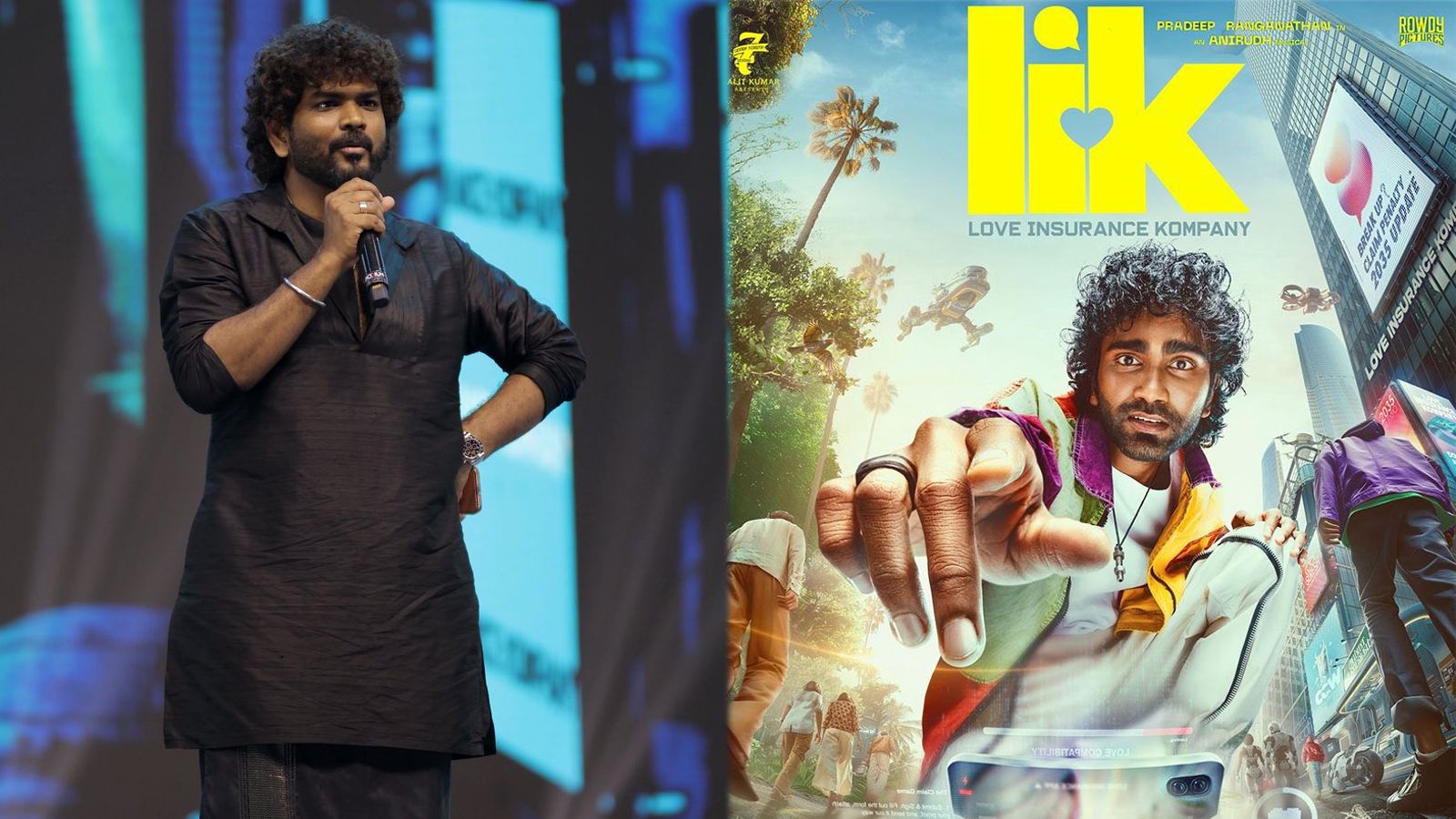
Vignesh Shivan, best known as the husband of Lady Superstar Nayanthara, recently delivered a major box office flop with Tamil star Pradeep Ranganathan. Their film LIK failed to make any impact in theaters and disappeared from the box office almost immediately.
Now that the film has started streaming on OTT, Vignesh Shivan has opened up about its failure. He expressed disappointment that audiences did not give enough support to what he described as a sincere and different attempt. He also believes the film deserved greater appreciation.
In his own words:”Some films survive negative reviews; others don’t. For films that lack support from their ecosystem, industry peers, or influential voices, public perception can completely change their fate. Reviews written to showcase intelligence or superiority often do more than critique a film; they can discourage audiences from giving it a chance and crush the dreams of ambitious filmmakers.”
“What hurts most is how quickly the narrative shifted after a promising opening weekend. I genuinely feel that an earnest Tamil film that tried to be different, complete and original deserved a little more generosity from its audience.”
His comments raise an interesting question. Is he is directly blaming reviewers for the film’s downfall, and laso is he directly blaming audiences for not watching it in theaters?
From the way he framed his response, it appears to be a mix of both. The underlying message seems to be that the film was not given a fair chance, either by critics or by moviegoers.
However, this once again highlights a familiar trend in the industry. Whenever a film fails, some filmmakers tend to point fingers at reviewers, audiences, or social media narratives instead of examining the film itself.
The reality is simple. Filmmakers have complete control over a movie until its release. After that, the verdict belongs to the audience. Whether the result is positive or negative, it has to be accepted.
Many directors, including Vignesh Shivan, seem to overlook this basic fact. Instead of questioning the audience’s response after release, the focus should be on ensuring the film connects with viewers before it reaches theaters. Once a film is out, there are no excuses, only results.