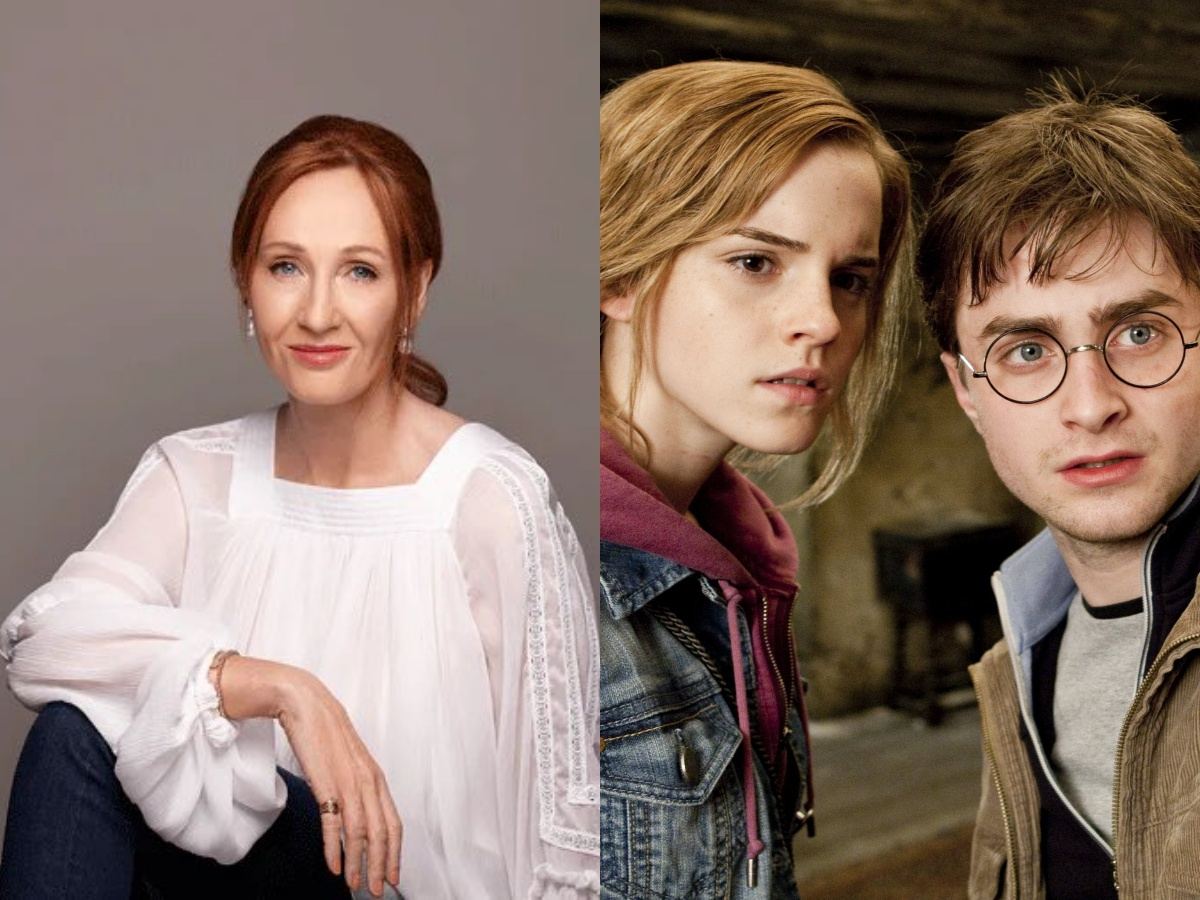
The relationship between the author and the actors are getting sour because of their personal take about Transgender rights.
J K Rowling, who is well known for her Wizarding World series Harry Potter again got entangled with her controversial opinion about trans rights. She can not accept that a trans woman is also a woman.
Based on this very debate the relationship between J K Rowling and Daniel Radcliffe and Emma Watson is getting bad again, safe to say the author is quite angry with them, because of their different point of views.
In 2020, Rowling publicly posted in Twitter now known as “X” is, “I refuse to bow down to a movement that I believe is doing demonstrable harm in seeking to erode ‘woman’ as a political and biological class and offering cover to predators like few before it.”
As a response to this highly critical post, Emma Watson twitted, “I want my trans followers to know that I and so many other people around the world see you, respect you and love you for who you are”, expressing her support towards trans people.
On the other hand Daniel Radcliffe talked about his point of view towards trans people in a short essay for Trevor Project. Stating the fact that, “transgender women are women”.
Once they had a beautiful relationship but, isn’t it quite absurd that why can’t she take someone else’s opinion?
Recently in an article about detransitioners it was said that, many people have said that, their gender identity remained fluid well after the start of treatment, and one in every three trans people regret their decision to transition from the gender they were born in.
After this a series of comments again took the front seat, a fan comment on J K Rowling’s post that ,“Just waiting for Dan and Emma to give you a very public apology … safe in the knowledge that you will forgive them.”
To this Rowling replied with, “Not safe, I’m afraid. Celebs who cosied up to a movement intent on eroding women’s hard-won rights and who used their platforms to cheer on the transitioning of minors can save their apologies for traumatised detransitioners and vulnerable women reliant on single sex spaces.”