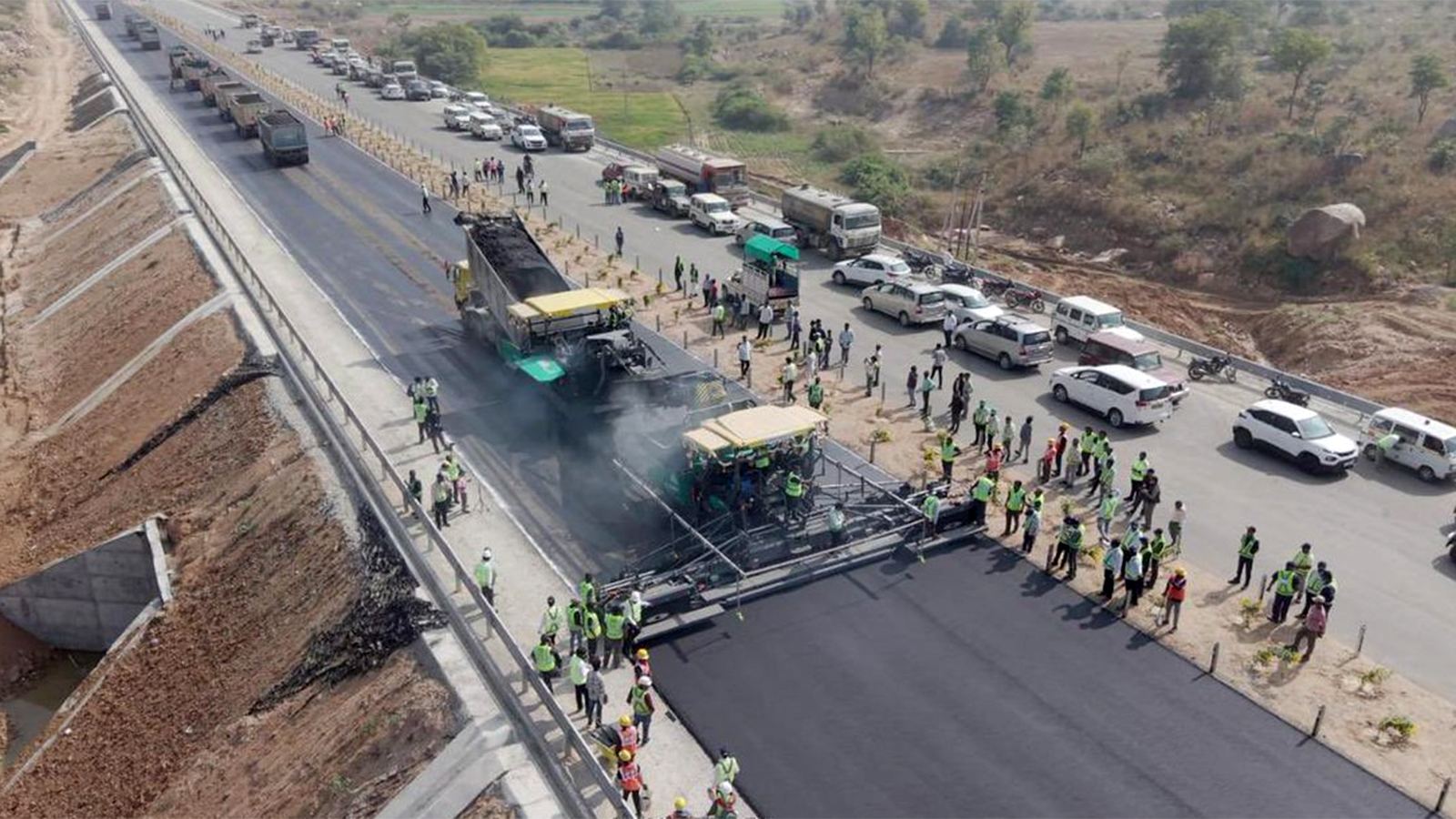
Amaravati may be the political symbol of Andhra Pradesh’s future, but the state’s next big growth story could well be a highway.
The Bengaluru-Kadapa-Vijayawada (BKV) Economic Corridor is much more than another road project. If completed on schedule, it has the potential to change how people, goods and investments move across Andhra Pradesh.
The immediate benefit is obvious. Travel time between Bengaluru and Vijayawada is expected to drop from nearly 12 hours to around 6-7 hours.
But the bigger story is economic.
Better highways don’t just help commuters. They make it easier for industries to transport raw materials, move finished goods and build supply chains. Lower logistics costs often become the biggest reason companies choose one location over another.
That is why this project is being developed as an economic corridor, not just a national highway.
Districts like Sri Sathya Sai, YSR Kadapa and Prakasam, which have traditionally missed out on large-scale investments, could become more attractive as they gain faster access to Bengaluru’s industrial ecosystem and Andhra Pradesh’s ports.
The corridor also fits into the state’s larger development strategy. Along with Amaravati, Visakhapatnam, ports and industrial parks, better connectivity is becoming one of Andhra Pradesh’s biggest selling points for investors.
Of course, highways alone do not create economic growth. Industries, power, skilled workforce and faster approvals must follow. Andhra Pradesh has seen infrastructure projects in the past that did not fully deliver because the supporting ecosystem was slow to develop.
Completion is another key challenge. With a significant portion of the work already finished, expectations are high. But the real success of the project will be measured not by construction progress, but by the investments and jobs that follow.
If that happens, the BKV Economic Corridor could become far more than a faster route to Bengaluru.
It could become one of the roads that reshapes Andhra Pradesh’s economy.