F-1 Crackdown: Students’ Worst Nightmare Gets Real
International students aspiring to study in America have just met their worst nightmare, as social media screening has officially begun at the US consulates.
However, the US Citizenship and Immigration Services (USCIS) and the Department of State (DOS) are not making this process easy as most people are leaving their interviews confused.
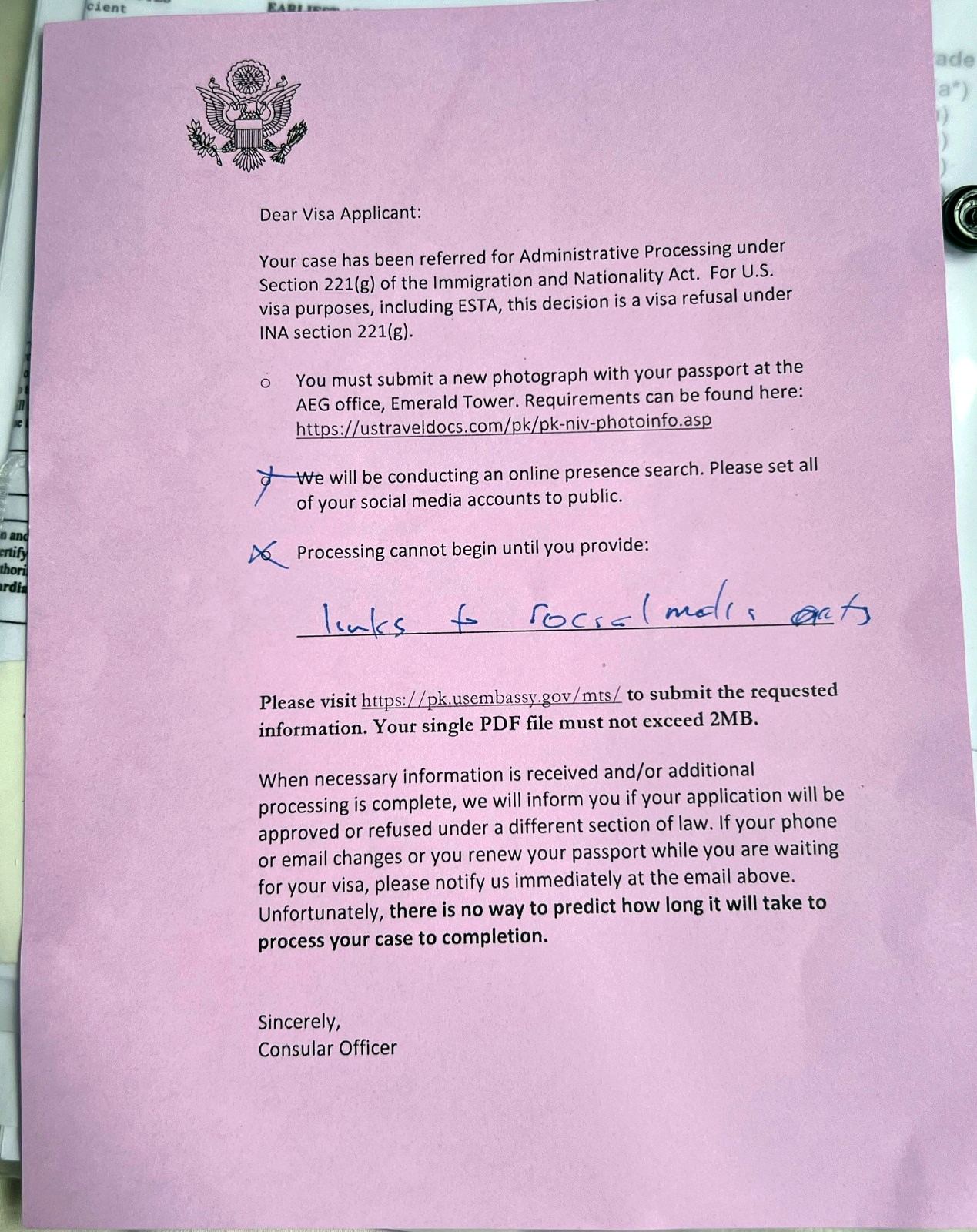
Social media users are finding it hard to wrap their heads around how to give links to their accounts on the immigration form. Most of them report getting a refusal under 221 (g) by the visa officer.
The officials also gave a verbal warning to the applicants to keep their online accounts public in addition to handing them out these forms that explicitly read, “Processing cannot begin until you provide: links to social media accounts.”
It is important to note that for US visas “refusal” is different from a “rejection.” Therefore when an officer hands you a 221 (g) slip, your status may change to “refused” on the web portal but it means that the application is under “administrative processing.”
Previously, this meant that the DOS would conduct a background check on your profile. However, now it just means the highly ranked officials have a job to go through your online posts, memes, and tweets to gauge if you’re a threat to the US.
This is not something out of a dystopian novel, this is the reality we’re living in. No matter how bizarre it sounds, the students are facing this nightmare with almost all people getting the “refused” tag before getting “approved” or “rejected” days later.
The Indian students, however, still have no option of experiencing this horror show as there are no visa slots available to book.
On top of the social media screening and delayed visa slots, the F-1 visa rejections are on the rise. Visa officers are rejecting students in seconds under 214 (b), i.e., “not proving strong ties to their home country.”
While people think deleting their online posts might help their case, especially if they are anti-Trump, others are skeptical. The DOS can easily track that information and it will raise more alarms, making it easier for them to reject you.
This is not about mere rejections, the visa officers can always reject you under 214 (b) and they are not obliged to give you an explanation if they doubt you are moving to the US to get settled.
This screening is about delaying the process and warning every student before they enter the US, that they must comply with the strict rules, no matter how absurd.