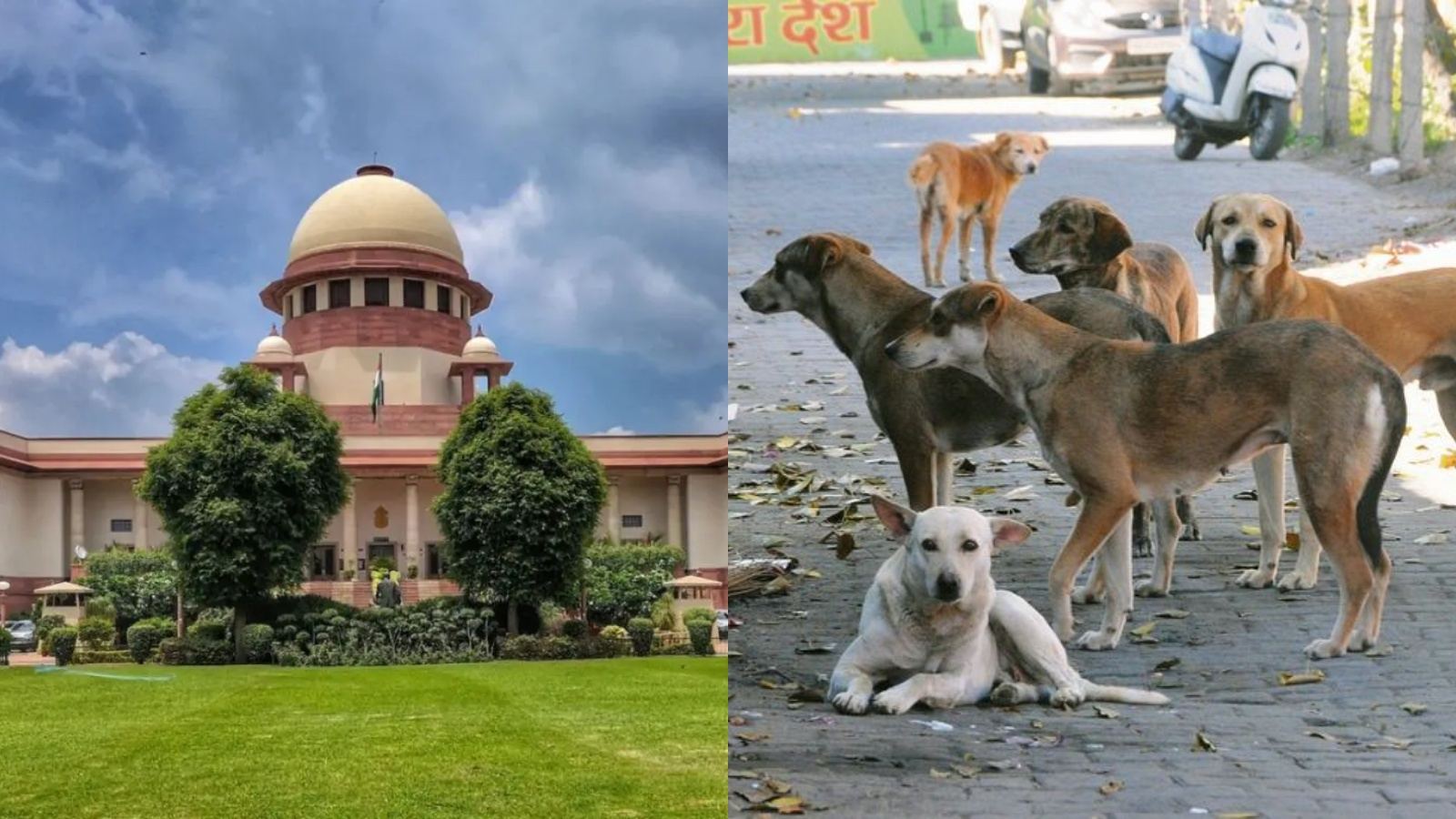
The Supreme Court has modified the Delhi High Court’s order on relocating stray dogs to shelters. Instead of permanent relocation, the Apex Court directed authorities to sterilise and vaccinate the dogs before releasing them back into their original locations.
Aggressive and rabid dogs, however, must be kept in shelters for public safety. The court also imposed a ban on feeding stray dogs in public places and warned of strict action against violators. The directive has been extended to the entire country.
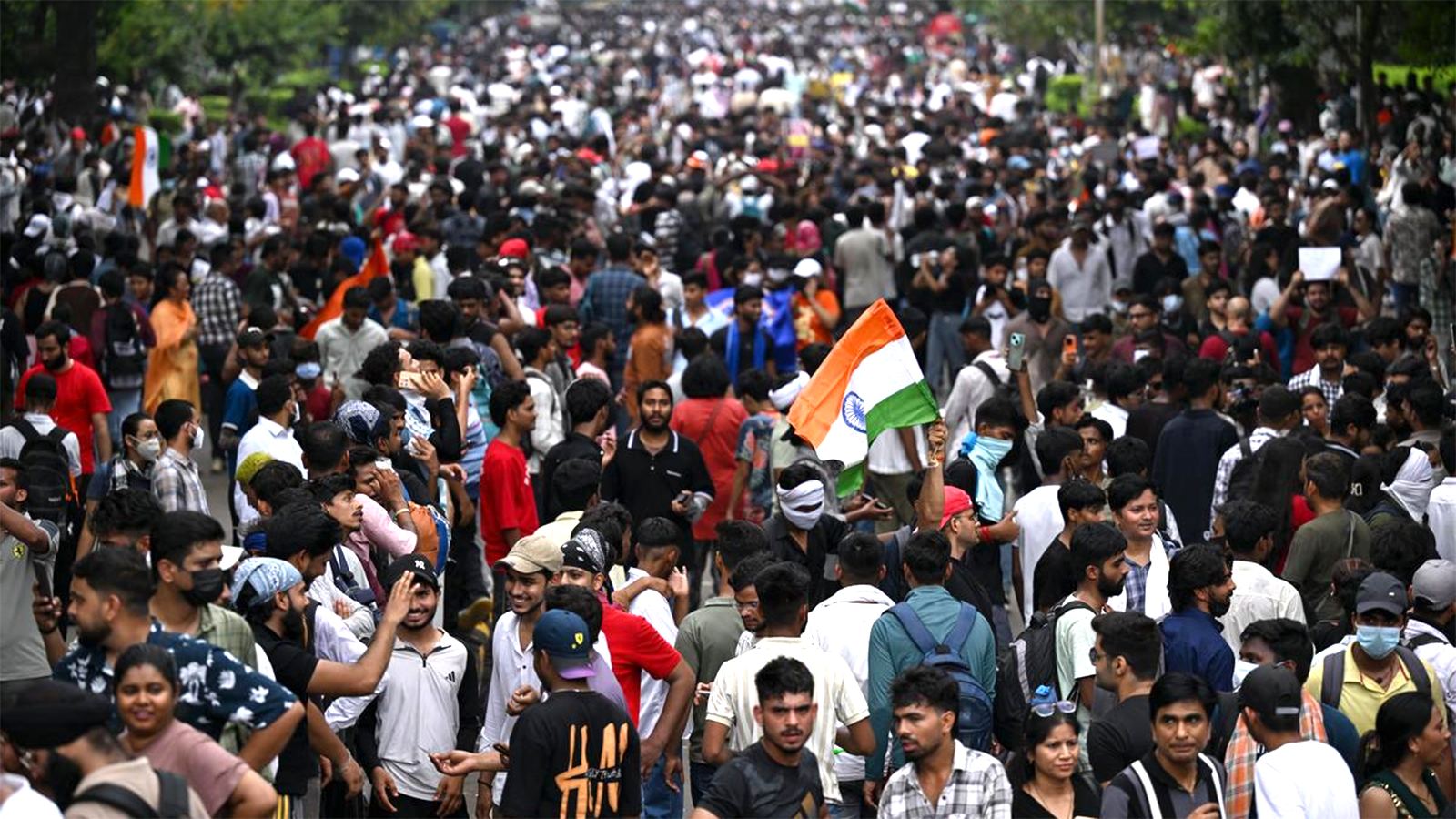
This landmark ruling came from a special three-judge bench comprising Justices Vikram Nath, Sandeep Mehta, and NV Anjaria. The decision followed widespread protests from dog lovers and animal welfare groups, who claimed existing shelters are inadequate and poorly equipped.
While the court’s order is well-intentioned, its practical implementation poses serious challenges. Sterilisation of stray dogs can cost between ₹1,500 and ₹8,000 per dog. Female dogs generally require higher costs, ranging from ₹2,000 to ₹8,000, compared to ₹1,500 to ₹6,000 for males.
Rabies vaccination adds to the financial burden. Each dose costs between ₹300 and ₹1,500, and every dog requires two doses annually. While sterilisation is a one-time expense, vaccination is a recurring cost. Most municipalities are already underfunded and struggle to manage such large-scale operations.
Identifying aggressive dogs is another major challenge. Canine aggression can be triggered by fear, hunger, pain, illness, hormonal changes, provocation, or maternal instincts. Some dogs are simply unable to socialise in human habitats, making monitoring extremely difficult.
While banning the feeding of stray dogs in public spaces is a welcome step, the Apex Court must specify penalties for violators. Without clear enforcement measures, the order may not achieve its intended impact.
India reported around 37 lakh dog bite cases in 2024, averaging more than 10,000 incidents daily. Alarmingly, over 5.19 lakh cases involved children under 15 years of age. Experts believe the actual number, including unreported cases, is much higher.
Critics argue that some dog lovers prioritise stray dogs over human safety. Many refuse to shelter dogs in their homes yet oppose any measures to control the growing menace. Celebrities also face criticism for showing public affection toward stray dogs while adopting foreign breeds.
The growing issue of stray dog attacks raises a crucial question: Should public safety or street animal welfare take precedence? As Bigg Boss democracy thrives on television, India seems to be dealing with a real-life case of “dogocracy” ruling its streets.