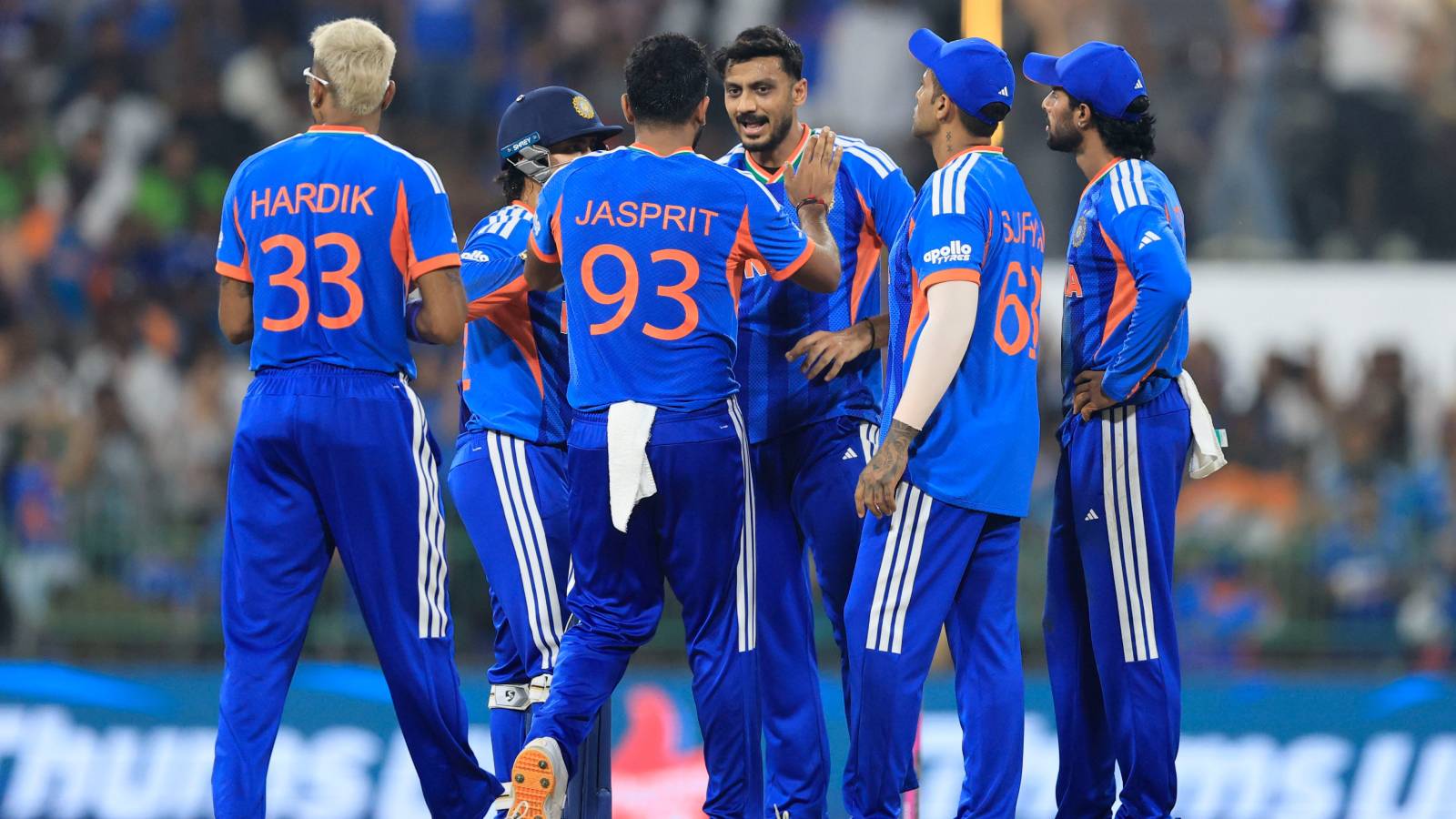
The most anticipated match of the T20 World Cup 2026 ended in a one sided contest. What was promoted as a major rivalry instead highlighted the performance gap between the two teams on the field.
India dominated the game from the beginning. Pakistan won the toss and chose to bowl first, hoping to restrict India and chase the target under lights on the same pitch.
India posted 175 for 7 in 20 overs, a competitive total built with controlled batting. After Abhishek Sharma was dismissed for zero, Ishan Kishan scored a quick half century off 27 balls.
Tilak Varma contributed 25 off 24 balls, while Suryakumar Yadav added 32 off 29 deliveries. Despite Hardik Pandya’s early dismissal, the middle order ensured India maintained steady momentum.
Pakistan’s chase began poorly with Sahibzada Farhan dismissed for zero. Early breakthroughs from Jasprit Bumrah put the team under pressure during the powerplay overs.
Bumrah removed Saim Ayub and Salman Ali Agha in quick succession. Axar Patel later dismissed Babar Azam for 5, leaving Pakistan struggling before the halfway stage.
Under pressure, Pakistan’s batters failed to build partnerships. The attempt to play aggressive shots resulted in frequent wickets, preventing any chance of a recovery.
Usman Khan scored 44 runs, while Shadab Khan added 14. However, their efforts were not enough as India secured a comfortable 61 run victory.
The match had generated huge excitement before the start, with strong reactions on social media and predictions from experts. On the field, however, India remained in control throughout the contest.
India’s confidence was visible in both batting and bowling. The team maintained discipline and sharp fielding, while Pakistan struggled to handle pressure in key moments.
With this result, India advanced to the Super 8 stage with confidence. Pakistan, meanwhile, faces questions about performance and consistency in high pressure matches.